A little poem that I've been working on for some time. I think I can leave it now :-
It is still light outside,
for the summer is not yet done with;
the sun splashes gold against the closed curtains.
Having played with every toy, and played again,
and having asked and answered so many questions,
and having completed an experimentation
with dancing, climbing, tumbling, sitting, falling,
having run through the day
they have outrun the sun into night-time,
child, and mother too.
Saturday, 30 January 2016

Tuesday, 26 January 2016
Maurice
A poem I've been working on for several years . . .
Maurice is standing where he can see the road;
Maurice keeps alert, likes to see what may be coming.
He does not want to be taken by surprise.
The day, as ever, is a hot one; for a while
Maurice studies the shimmering poles that stand in line along the road,
each one topped by its football nest of swallows.
A few of the birds are sitting along the wires;
their long tail feathers twist and trail as they jostle for places,
but nothing else is moving at all.
Maurice lifts the cigar from the front pocket
of his dusty jacket, sniffs it and taps it,
returns it to its place.
It is not yet time for cigars. There is a little shade
where he is standing, but even so
he fans himself briefly with his denim cap
before covering again his thinning hair.
From behind him, a sudden cough: some kind of machine.
Maurice looks round, but there is nothing to see. He knows that
over on the other side of the hill
Marco’s men will be harvesting the tobacco,
and hanging the yellowing leaves to dry; while,
stretched out ahead of him into the haze,
the road he has come to watch remains empty.
Maurice waits a while longer, kicking his boots against a stone.
Most days he comes to stand here, hoping to see
that red cloud of dust,
something riding the dirt road towards him.
Nothing much ever comes out this far,
just now and again a car, a truck, a pick-up; maybe Father Elias
with the minibus from the Parish House.
Each sudden and seldom plume of dust
is a lift and a catch to his heart,
and always he is disappointed, and still, and yet, he waits,
waits for the son to whom, all those years ago,
he waved a good-bye and blessing, waits for
his smiling prodigal boy who left this dry land
to tread the golden sidewalks of the city.
Maurice is standing where he can see the road;
Maurice keeps alert, likes to see what may be coming.
He does not want to be taken by surprise.
The day, as ever, is a hot one; for a while
Maurice studies the shimmering poles that stand in line along the road,
each one topped by its football nest of swallows.
A few of the birds are sitting along the wires;
their long tail feathers twist and trail as they jostle for places,
but nothing else is moving at all.
Maurice lifts the cigar from the front pocket
of his dusty jacket, sniffs it and taps it,
returns it to its place.
It is not yet time for cigars. There is a little shade
where he is standing, but even so
he fans himself briefly with his denim cap
before covering again his thinning hair.
From behind him, a sudden cough: some kind of machine.
Maurice looks round, but there is nothing to see. He knows that
over on the other side of the hill
Marco’s men will be harvesting the tobacco,
and hanging the yellowing leaves to dry; while,
stretched out ahead of him into the haze,
the road he has come to watch remains empty.
Maurice waits a while longer, kicking his boots against a stone.
Most days he comes to stand here, hoping to see
that red cloud of dust,
something riding the dirt road towards him.
Nothing much ever comes out this far,
just now and again a car, a truck, a pick-up; maybe Father Elias
with the minibus from the Parish House.
Each sudden and seldom plume of dust
is a lift and a catch to his heart,
and always he is disappointed, and still, and yet, he waits,
waits for the son to whom, all those years ago,
he waved a good-bye and blessing, waits for
his smiling prodigal boy who left this dry land
to tread the golden sidewalks of the city.
Saturday, 23 January 2016
On Being One Body
My sermon for tomorrow :-
I’ve been out buying new clothes, Ann having informed me that half the contents of my wardrobe were on their way to the skip. Optimistically I bought new clothes the same size as my old clothes. Post-Christmas, my body could be a bit trimmer than it seems to be, and I need to get a bit more fit.
When I watch a great athlete in action I can’t help but be amazed at their grace and co-ordination. Joints and muscles, all the different components of the human body, are working together in an effective and beautiful harmony. It’s not been like that for me, so far. All the different components of my body seem to be working against each other, and I have aches and pains all over. It’ll get better I’m sure, but just now my body is not a well-oiled machine, it’s more like a sackful of old worn-out bits.
Paul describes the Church as a single body with its many limbs and organs. This is one of his great images, a helpful and challenging way of understanding this thing called “church”. In fact, the church he was writing to in Corinth was more like my body just now than what the Church ought to be. Its members weren’t co-operating with each other, instead they were fractious and argumentative.
Paul wasn’t happy with them, therefore. A disunited church can’t bear a good witness to Christ. So Paul wrote to tell them to get their act together, but as he wrote he found these words that are a high point in his writing. His very finest words, about love, are in the next chapter, but first we have this great image: the Church is the body of Christ.
So each one of us is a limb or organ of that body. And therefore no-one is complete as a Christian without the rest of the body; and every individual member should be supporting the whole body; as members of Christ we have a responsibility for one another and to the whole body.
If we think of church as a building to come to, say prayers at and then go home from, or as an organisation we pay our subs to, this isn’t how Paul saw it. Church is who we are together; and what we are is the body of Christ.
The parts of my body are rebelling just now at my new attempts to get fit. But there are other times when parts of a body just stop working as they should, and maybe the owner of that body lands up in hospital. What's true for an individual human body is true as well for the individual church. Our churches should be lively, attractive, warm and loving places, where God’s word is actively lived, but I’ve known too many that have become unhappy, argumentative, divided. A person looking for faith and meaning there won’t find much to help them.
What about the Church with a capital C, nationwide or worldwide. We’re in the Week of Prayer for Christian Unity just now. Sadly, we don’t have Christian unity; if we had we wouldn't need the week. The body of Christ finds a variety of expression and tradition and practice, and that’s fine. Our faith crosses many boundaries of geography and culture, and it's by no means the end of the world if we don't all sing the same hymns. But I do pray for unity of purpose and community, and that we recognise each other as sisters and brothers, as fellow pilgrims, sharing one Lord, one faith, one baptism, the vital essentials of faith that bond us together.
Even within our own denomination, the Anglican Communion, there’s disagreement and tension. Here’s what the Archbishop of Canterbury, said to the gathered primates of the Anglican Communion the other week: “We so easily take our divisions as normal, but they are in fact an obscenity, a denial of Christ’s call and equipping of the Church . . . the world does not see the spiritual Church but a divided and wounded body.” Strong words which we really do need to hear and take on board.
Conservatives might respond that we can only have unity when those who need to repent of their liberal errors and join them in believing the true Gospel. Liberals might say that unity depends on a spirit of tolerance that accepts diversity and makes space for minorities. We all read the same scripture, but there are some deep divisions as regards interpretation and practice. How do we deal with that? It may be hard and uncomfortable, but the Church has to work at being united in spirit and purpose even when we don’t always agree. As Archbishop Justin went on to say: “There has never been a time when the Church was one in view, but it has often been one in heart.”
Paul’s great image of the Body of Christ challenges the Church at every level, local, national, international. It challenges the divisions between denominations, and the divisions within denominations. And it challenges us to be more aware of our responsibility for one another in each local fellowship and congregation.
We need the same discipline in the Church, as I need as regards getting my own human body fit. For we need to be pulling our weight as the body of Christ in mission. I’m personally challenged here, as a minister; after all, I'm quite an old fashioned priest, and therefore something of a one man band. But a Church growing as the Body of Christ needs a new sharing of ministry, a willingness to recognise the ministry of others, and a commitment to enable that ministry.
In First Peter we read that the Church is to be a kingdom of priests, in other words we all have an investment in ministry. We need that if the Body is to thrive and grow. Every part of the body is important, including the parts which are thought of as lowly and humble. And maybe some of the parts that are sure of their own importance need to learn a bit of humility.
Jesus himself told his disciples he was among them as one who served, and that the greatest among them should learn to be the servant of all. A Church whose members are serving each other, and are compassionate and caring towards one another, is a body that is straight away Christ-like. Where service is central to the ethos of the church, then service is what the church will be doing in the world. Such a church will be a healing Church, a compassionate Church, and a welcoming Church. As we re-learn what it means to be one active body together, we become more attractive to those who are searching for God, including those who don’t yet realise that’s what they’re doing. They’ll want to know more of what we are about; and if we are one Body, with limbs and organs in place and harmonious and supporting each other, then those who look will see not us, but our Lord.
I’ve been out buying new clothes, Ann having informed me that half the contents of my wardrobe were on their way to the skip. Optimistically I bought new clothes the same size as my old clothes. Post-Christmas, my body could be a bit trimmer than it seems to be, and I need to get a bit more fit.
When I watch a great athlete in action I can’t help but be amazed at their grace and co-ordination. Joints and muscles, all the different components of the human body, are working together in an effective and beautiful harmony. It’s not been like that for me, so far. All the different components of my body seem to be working against each other, and I have aches and pains all over. It’ll get better I’m sure, but just now my body is not a well-oiled machine, it’s more like a sackful of old worn-out bits.
Paul describes the Church as a single body with its many limbs and organs. This is one of his great images, a helpful and challenging way of understanding this thing called “church”. In fact, the church he was writing to in Corinth was more like my body just now than what the Church ought to be. Its members weren’t co-operating with each other, instead they were fractious and argumentative.
Paul wasn’t happy with them, therefore. A disunited church can’t bear a good witness to Christ. So Paul wrote to tell them to get their act together, but as he wrote he found these words that are a high point in his writing. His very finest words, about love, are in the next chapter, but first we have this great image: the Church is the body of Christ.
So each one of us is a limb or organ of that body. And therefore no-one is complete as a Christian without the rest of the body; and every individual member should be supporting the whole body; as members of Christ we have a responsibility for one another and to the whole body.
If we think of church as a building to come to, say prayers at and then go home from, or as an organisation we pay our subs to, this isn’t how Paul saw it. Church is who we are together; and what we are is the body of Christ.
The parts of my body are rebelling just now at my new attempts to get fit. But there are other times when parts of a body just stop working as they should, and maybe the owner of that body lands up in hospital. What's true for an individual human body is true as well for the individual church. Our churches should be lively, attractive, warm and loving places, where God’s word is actively lived, but I’ve known too many that have become unhappy, argumentative, divided. A person looking for faith and meaning there won’t find much to help them.
What about the Church with a capital C, nationwide or worldwide. We’re in the Week of Prayer for Christian Unity just now. Sadly, we don’t have Christian unity; if we had we wouldn't need the week. The body of Christ finds a variety of expression and tradition and practice, and that’s fine. Our faith crosses many boundaries of geography and culture, and it's by no means the end of the world if we don't all sing the same hymns. But I do pray for unity of purpose and community, and that we recognise each other as sisters and brothers, as fellow pilgrims, sharing one Lord, one faith, one baptism, the vital essentials of faith that bond us together.
Even within our own denomination, the Anglican Communion, there’s disagreement and tension. Here’s what the Archbishop of Canterbury, said to the gathered primates of the Anglican Communion the other week: “We so easily take our divisions as normal, but they are in fact an obscenity, a denial of Christ’s call and equipping of the Church . . . the world does not see the spiritual Church but a divided and wounded body.” Strong words which we really do need to hear and take on board.
Conservatives might respond that we can only have unity when those who need to repent of their liberal errors and join them in believing the true Gospel. Liberals might say that unity depends on a spirit of tolerance that accepts diversity and makes space for minorities. We all read the same scripture, but there are some deep divisions as regards interpretation and practice. How do we deal with that? It may be hard and uncomfortable, but the Church has to work at being united in spirit and purpose even when we don’t always agree. As Archbishop Justin went on to say: “There has never been a time when the Church was one in view, but it has often been one in heart.”
Paul’s great image of the Body of Christ challenges the Church at every level, local, national, international. It challenges the divisions between denominations, and the divisions within denominations. And it challenges us to be more aware of our responsibility for one another in each local fellowship and congregation.
We need the same discipline in the Church, as I need as regards getting my own human body fit. For we need to be pulling our weight as the body of Christ in mission. I’m personally challenged here, as a minister; after all, I'm quite an old fashioned priest, and therefore something of a one man band. But a Church growing as the Body of Christ needs a new sharing of ministry, a willingness to recognise the ministry of others, and a commitment to enable that ministry.
In First Peter we read that the Church is to be a kingdom of priests, in other words we all have an investment in ministry. We need that if the Body is to thrive and grow. Every part of the body is important, including the parts which are thought of as lowly and humble. And maybe some of the parts that are sure of their own importance need to learn a bit of humility.
Jesus himself told his disciples he was among them as one who served, and that the greatest among them should learn to be the servant of all. A Church whose members are serving each other, and are compassionate and caring towards one another, is a body that is straight away Christ-like. Where service is central to the ethos of the church, then service is what the church will be doing in the world. Such a church will be a healing Church, a compassionate Church, and a welcoming Church. As we re-learn what it means to be one active body together, we become more attractive to those who are searching for God, including those who don’t yet realise that’s what they’re doing. They’ll want to know more of what we are about; and if we are one Body, with limbs and organs in place and harmonious and supporting each other, then those who look will see not us, but our Lord.
Monday, 18 January 2016
Plants Can't Come In From The Cold . . .
My "Nature Notes" column for the month :-
If you had to spend even a day or so standing outside your house without moving, and without any clothes, at this time of the year, I wonder how long you’d last? Plants have to do it all winter long. The mild weather before Christmas encouraged spring flowers like celandines and even daffodils to flower, while some of last summer’s wayside flowers, for example yarrow and hogweed, could still be found along the hedgebanks. But since then, we’ve had something more like winter - so how do our countryside and garden plants cope?
Frost and cold can be pretty bad for a plant. Ice crystals forming inside the plant’s cells can cause an expansion that quite simply bursts them open. Water freezing between the cells will effectively dessicate the plant, drying it out. Alongside this, the cold leads to a decrease in enzyme activity and affects the way membranes and channels work, and this too can cause severe harm to the plant.
Some plants do simply die, of course. Annual plants survive only the one year; once their seeds are set they die, and it’s the seed that will ensure the continuation of the species over winter. Perennial plants do survive winter, but the exposed plant above ground may well not. Many such plants will have underground storage organs: tubers (e.g. potatoes), or tap roots (e.g. carrots, parsnips - and dandelions). Others have tangled networks of underground roots (e.g. stinging nettles), or produce bulbils, bulbs and corms (e.g. celandines, onions, daffodils or crocus). Food reserves are built up through the summer and autumn, and these sustain the plant in winter, and when spring comes are used to grow new leaves and shoots above ground. Perennial plants can do this year after year, though of course they will often also produce large numbers of seeds each year.
But some cold-tolerant plants can survive freezing temperatures. There are several ways in which they do this. A decent layer of snow can itself help to insulate the plants beneath it, while trees and other woody plants are protected by the bark and the woody outer layers beneath it. That’s rather like lagging your water pipes. The leaves and needles of evergreen trees have a waxy layer that helps protect them.
Some plants accumulate solutes like sucrose in their cells. This tends to build up naturally in response to the shortening of days, and will depress the freezing point of water, rather like the salt and grit on our roads. This is effective down to about 20 degrees Fahrenheit. There are also “antifreeze” proteins that can help prevent ice crystals forming in the spaces between cells, and so-called “dehydrins”, proteins that bind water molecules and help stabilize cell membranes. Plants may need to experience several days of cold weather before a freeze for these to be produced, so even hardy plants may be damaged by a sudden sharp freeze. But even plants that seem wrecked by winter can still rejuvenate from buds at or below ground level, when spring at last returns.
If you had to spend even a day or so standing outside your house without moving, and without any clothes, at this time of the year, I wonder how long you’d last? Plants have to do it all winter long. The mild weather before Christmas encouraged spring flowers like celandines and even daffodils to flower, while some of last summer’s wayside flowers, for example yarrow and hogweed, could still be found along the hedgebanks. But since then, we’ve had something more like winter - so how do our countryside and garden plants cope?
Frost and cold can be pretty bad for a plant. Ice crystals forming inside the plant’s cells can cause an expansion that quite simply bursts them open. Water freezing between the cells will effectively dessicate the plant, drying it out. Alongside this, the cold leads to a decrease in enzyme activity and affects the way membranes and channels work, and this too can cause severe harm to the plant.
Some plants do simply die, of course. Annual plants survive only the one year; once their seeds are set they die, and it’s the seed that will ensure the continuation of the species over winter. Perennial plants do survive winter, but the exposed plant above ground may well not. Many such plants will have underground storage organs: tubers (e.g. potatoes), or tap roots (e.g. carrots, parsnips - and dandelions). Others have tangled networks of underground roots (e.g. stinging nettles), or produce bulbils, bulbs and corms (e.g. celandines, onions, daffodils or crocus). Food reserves are built up through the summer and autumn, and these sustain the plant in winter, and when spring comes are used to grow new leaves and shoots above ground. Perennial plants can do this year after year, though of course they will often also produce large numbers of seeds each year.
But some cold-tolerant plants can survive freezing temperatures. There are several ways in which they do this. A decent layer of snow can itself help to insulate the plants beneath it, while trees and other woody plants are protected by the bark and the woody outer layers beneath it. That’s rather like lagging your water pipes. The leaves and needles of evergreen trees have a waxy layer that helps protect them.
Some plants accumulate solutes like sucrose in their cells. This tends to build up naturally in response to the shortening of days, and will depress the freezing point of water, rather like the salt and grit on our roads. This is effective down to about 20 degrees Fahrenheit. There are also “antifreeze” proteins that can help prevent ice crystals forming in the spaces between cells, and so-called “dehydrins”, proteins that bind water molecules and help stabilize cell membranes. Plants may need to experience several days of cold weather before a freeze for these to be produced, so even hardy plants may be damaged by a sudden sharp freeze. But even plants that seem wrecked by winter can still rejuvenate from buds at or below ground level, when spring at last returns.
Saturday, 16 January 2016
Water into Wine
A sermon to be preached tomorrow, Epiphany 2 :-
The last wedding in our family was our own daughter’s in the September before last, but this year we’ve two nephews and a niece planning weddings, and hints of another nephew thinking along the same lines - so there’s a bit of a buzz in the air in our family. Weddings these days are something of an industry in themselves. I’m sure I heard someone the other day on the TV talking about doing an apprenticeship as a wedding planner. Goodness, I thought, there’ll be a degree course in it before long. Perhaps there already is.
Of the three weddings we’ve got on the go, two I know nothing about as yet, except for the odd hint on Facebook. The one I do know about, the reception will be at Slater’s Country Inn at Baldwin’s Gate which is between Shrewsbury and Newcastle-under-Lyme. I'd be very surprised if the wine ran out there, and I can’t imagine my niece Vicki letting it happen. For us, wine's essential at a wedding, at the meal itself and for the toasts afterwards; and at a traditional Jewish wedding, wine would be just as important, if not more so. One rabbinical saying tells us that "without wine there is no joy." Not that folk would get plastered - drunkenness, in fact, would have been a great disgrace at a Jewish wedding; but it would have been just as much a disgrace if the wedding host fell short in the hospitality he offered to his guests.
So there would need to be plenty of wine on hand. So the story we’ve heard this morning begins with something of a tragedy. There’s a wedding, and the wine has given out. There may have been a miscalculation as regards numbers (maybe even caused by the friends of Jesus, arriving unannounced or hastily invited at the last minute). Maybe some of the wine had turned out to be too sour to use. Whatever the reason, things had gone badly wrong, so much so that Mary turned to her son and said to him, "Do something!"
And there our story begins. In fact, the reply Jesus gave his mother may seem to our ears rather harsh and discourteous. While we have only the written words, and can’t hear the tone of his voice, Jesus seems to be saying something like: "I should not be doing this yet! The time is not yet right!" But maybe the time was right, after all.
Certainly, Mary has faith enough in her son simply to say to the servants, "Do whatever he tells you." And so it is that we witness one of the events of Epiphany; one of the decisive acts that display Jesus for who he is - not just Jesus the son of Joseph the carpenter, but Jesus the Christ, for those with the eyes to see it.
For those of a puritan turn of mind, it's worth noting that this first miracle of Jesus took place at a social do, with the aim of making the party go with more of a swing than it might have otherwise. Jesus, it seems, enjoyed a good party. But a wedding was in any case a good symbolic setting for this miracle. Prophets like Hosea and Isaiah used wedding language to speak of the relationship between Israel and her God - the Covenant made with Moses when the law was given formed a relationship as mutually close and strong as when a wife is joined to her husband. The same image is used in the New Testament, in the Book of Revelation and in the letters of St Paul: there is a New Covenant made through Jesus, and the Church is the new Israel, spoken of as the Bride of Christ.
When John tells a story every detail tends to have a meaning beyond itself. There were six big old water jars, intended for the purification required by the Law of Moses. Do they represent the old Covenant? There were six of them, which is in Scripture an imperfect or unfinished number: does John want us to think about the imperfection of the old Law?
Scholars through the years have played about with this passage in such a way. Whether or not we try to find a message in each little facet of this story, there’s certainly a message in the story as a whole about the transformation of the old law, the old relationship with God. There’s something new beginning, here and now, in the man Jesus of Nazareth. What was merely water is being turned to wine. Maybe water represents the baptism of John, who said: "There’s one among you who will baptize with the Holy Spirit and with fire", while the new wine is a sign of Pentecost and of the fiery Spirit of God.
Where I certainly do find meaning is in the sheer amount of water that was changed into wine that day. Those jars of water would have contained something not far short of two hundred gallons. Turned to wine, that would have been enough for the wedding of a king. So this is by no means a half-hearted miracle, and we’re given a sign we can’t ignore of the liberality of God's grace. God's gifts of love, forgiveness, redemption, spiritual renewal are freely offered, are showered upon us, are certainly not rationed out. And we discover that there's no need on earth that can exhaust what God has to give, and that’s because what God gives is himself.
And all this took place in Cana, a place so small and unimportant that today no-one can be completely sure where it actually was. But in that little town the world was given a sign - a revelation - that in Jesus what was imperfect will be made perfect, and that in him there is grace unlimited, super- abundant grace, grace enough for every need. Grace given for everyone, not restricted to holy and special places, but ours wherever we meet in fellowship and service and celebration. I’m sure this is what John wants to tell us as he shares this story, and it's a good thing to hear as we come to the Week of Prayer for Christian Unity.
That week begins tomorrow, and encourages us to remember that whatever our differences as Christians, the God we worship and serve is one and the same: our generous and gracious Lord. We all share in the outpouring of his grace, and he calls on us to act graciously and generously together in his world. Only in our unity of purpose, and praise, and compassion, and care can the Gospel of our Lord be truly proclaimed.
For wherever Jesus went in life, and in all the things he did and said, it was like water turning into wine. That was so then, and it remains so today. If we invite Jesus into our hearts, remembering those simple words of Mary his Mother, "Do whatever he tells you," we too can be changed, transformed and renewed, like water into wine. The marks of a Church that’s doing this will be, I’m sure, generosity and joy, and these things are infectious: they spur people on, and they invite people in. Just imagine, if Jesus had performed a small and private miracle, ensuring there was just enough new wine for himself and his mates. But that’s not his way, not can it be ours. Our job is to be new wine for the world, and to give without expecting return or reward, but just because people need what we have.
Without wine there is no joy, said the rabbis. Jesus promises us, as he promised the people of Cana, that the new wine of his Spirit, the new wine of his abundant gifting, will be the source and well-spring of a deep and holy joy which is for us in fellowship and witness, and for the world in which he calls us to serve with a generosity that reflects and teaches his own.
The last wedding in our family was our own daughter’s in the September before last, but this year we’ve two nephews and a niece planning weddings, and hints of another nephew thinking along the same lines - so there’s a bit of a buzz in the air in our family. Weddings these days are something of an industry in themselves. I’m sure I heard someone the other day on the TV talking about doing an apprenticeship as a wedding planner. Goodness, I thought, there’ll be a degree course in it before long. Perhaps there already is.
Of the three weddings we’ve got on the go, two I know nothing about as yet, except for the odd hint on Facebook. The one I do know about, the reception will be at Slater’s Country Inn at Baldwin’s Gate which is between Shrewsbury and Newcastle-under-Lyme. I'd be very surprised if the wine ran out there, and I can’t imagine my niece Vicki letting it happen. For us, wine's essential at a wedding, at the meal itself and for the toasts afterwards; and at a traditional Jewish wedding, wine would be just as important, if not more so. One rabbinical saying tells us that "without wine there is no joy." Not that folk would get plastered - drunkenness, in fact, would have been a great disgrace at a Jewish wedding; but it would have been just as much a disgrace if the wedding host fell short in the hospitality he offered to his guests.
So there would need to be plenty of wine on hand. So the story we’ve heard this morning begins with something of a tragedy. There’s a wedding, and the wine has given out. There may have been a miscalculation as regards numbers (maybe even caused by the friends of Jesus, arriving unannounced or hastily invited at the last minute). Maybe some of the wine had turned out to be too sour to use. Whatever the reason, things had gone badly wrong, so much so that Mary turned to her son and said to him, "Do something!"
And there our story begins. In fact, the reply Jesus gave his mother may seem to our ears rather harsh and discourteous. While we have only the written words, and can’t hear the tone of his voice, Jesus seems to be saying something like: "I should not be doing this yet! The time is not yet right!" But maybe the time was right, after all.
Certainly, Mary has faith enough in her son simply to say to the servants, "Do whatever he tells you." And so it is that we witness one of the events of Epiphany; one of the decisive acts that display Jesus for who he is - not just Jesus the son of Joseph the carpenter, but Jesus the Christ, for those with the eyes to see it.
For those of a puritan turn of mind, it's worth noting that this first miracle of Jesus took place at a social do, with the aim of making the party go with more of a swing than it might have otherwise. Jesus, it seems, enjoyed a good party. But a wedding was in any case a good symbolic setting for this miracle. Prophets like Hosea and Isaiah used wedding language to speak of the relationship between Israel and her God - the Covenant made with Moses when the law was given formed a relationship as mutually close and strong as when a wife is joined to her husband. The same image is used in the New Testament, in the Book of Revelation and in the letters of St Paul: there is a New Covenant made through Jesus, and the Church is the new Israel, spoken of as the Bride of Christ.
When John tells a story every detail tends to have a meaning beyond itself. There were six big old water jars, intended for the purification required by the Law of Moses. Do they represent the old Covenant? There were six of them, which is in Scripture an imperfect or unfinished number: does John want us to think about the imperfection of the old Law?
Scholars through the years have played about with this passage in such a way. Whether or not we try to find a message in each little facet of this story, there’s certainly a message in the story as a whole about the transformation of the old law, the old relationship with God. There’s something new beginning, here and now, in the man Jesus of Nazareth. What was merely water is being turned to wine. Maybe water represents the baptism of John, who said: "There’s one among you who will baptize with the Holy Spirit and with fire", while the new wine is a sign of Pentecost and of the fiery Spirit of God.
Where I certainly do find meaning is in the sheer amount of water that was changed into wine that day. Those jars of water would have contained something not far short of two hundred gallons. Turned to wine, that would have been enough for the wedding of a king. So this is by no means a half-hearted miracle, and we’re given a sign we can’t ignore of the liberality of God's grace. God's gifts of love, forgiveness, redemption, spiritual renewal are freely offered, are showered upon us, are certainly not rationed out. And we discover that there's no need on earth that can exhaust what God has to give, and that’s because what God gives is himself.
And all this took place in Cana, a place so small and unimportant that today no-one can be completely sure where it actually was. But in that little town the world was given a sign - a revelation - that in Jesus what was imperfect will be made perfect, and that in him there is grace unlimited, super- abundant grace, grace enough for every need. Grace given for everyone, not restricted to holy and special places, but ours wherever we meet in fellowship and service and celebration. I’m sure this is what John wants to tell us as he shares this story, and it's a good thing to hear as we come to the Week of Prayer for Christian Unity.
That week begins tomorrow, and encourages us to remember that whatever our differences as Christians, the God we worship and serve is one and the same: our generous and gracious Lord. We all share in the outpouring of his grace, and he calls on us to act graciously and generously together in his world. Only in our unity of purpose, and praise, and compassion, and care can the Gospel of our Lord be truly proclaimed.
For wherever Jesus went in life, and in all the things he did and said, it was like water turning into wine. That was so then, and it remains so today. If we invite Jesus into our hearts, remembering those simple words of Mary his Mother, "Do whatever he tells you," we too can be changed, transformed and renewed, like water into wine. The marks of a Church that’s doing this will be, I’m sure, generosity and joy, and these things are infectious: they spur people on, and they invite people in. Just imagine, if Jesus had performed a small and private miracle, ensuring there was just enough new wine for himself and his mates. But that’s not his way, not can it be ours. Our job is to be new wine for the world, and to give without expecting return or reward, but just because people need what we have.
Without wine there is no joy, said the rabbis. Jesus promises us, as he promised the people of Cana, that the new wine of his Spirit, the new wine of his abundant gifting, will be the source and well-spring of a deep and holy joy which is for us in fellowship and witness, and for the world in which he calls us to serve with a generosity that reflects and teaches his own.
Sunday, 10 January 2016
Summons to Praise
(Based on Psalm 150)
Praise God in his holy places;
stars of heaven, your voices raise:
come, sing his mighty works of power,
and his surpassing greatness praise.
Praise God with the sounding trumpet,
praise him in the harp’s sweet lay,
the timbrel beating for the dance,
and strings and pipe in tuneful play.
Praise him in the crash of cymbals,
and in each resounding chord
let everything with life and breath
give praise to God, come praise the Lord.
Praise God in his holy places;
stars of heaven, your voices raise:
come, sing his mighty works of power,
and his surpassing greatness praise.
Praise God with the sounding trumpet,
praise him in the harp’s sweet lay,
the timbrel beating for the dance,
and strings and pipe in tuneful play.
Praise him in the crash of cymbals,
and in each resounding chord
let everything with life and breath
give praise to God, come praise the Lord.
Thursday, 7 January 2016
Epiphany Sermon
Preached last night at Leighton . . .
Despite the best efforts of modern-day astronomers, we can probably never know exactly what it was that the wise men saw in the east, or at its rising, that persuaded them to set out and try to find a new king? Matthew tells us that the star, whatever it was, not only started them off on their journey, but accompanied them at its close, going before them from Jerusalem to Bethlehem, till it stood over the place where Jesus lay. This is rather unusual behaviour for a star, so it may well be a bit of poetic licence on Matthew’s part. Still, omens were important, and a new light in the heavens would be bound to stand for something beyond itself, some special new event in the world, in this case the birth of a king.
Light is vital to our lives. Human beings see better in the dark than we might imagine, but only once we’ve managed to adjust. The eyes of a cat instantly adjust when it goes from a light place into a dark one, so it can see straight away. Our eyes take much longer to get used to the dark. Other senses like hearing and smell are nothing like as finely tuned in us as in cats, so we're not good in the dark. When we go out at night we need to take a light with us, especially out here in the countryside.
Light is vital to our lives, and light hailed Jesus as a King. A new star brought the news to those who could read the sky. Not only that, this child is himself light, and will be hailed as the Light of the World. And the whole season of Epiphany in the church year, beginning with the story of the wise men who followed a star, is the story of how that light is revealed to the world. This is no ordinary child, this is no ordinary man, this is the Light of the World, the saving love of God made flesh and dwelling among us.
We use different kinds of lights for different purposes. For a big sports event we switch on floodlights. We’ll need a good beam from our headlamps when we're driving, but we’ll need to dip it when someone else approaches. Walking in the dark or searching for things in my shed I’ll take a torch or maybe a lantern, and over my desk as I wrote this I had my trusty anglepoise lamp. In the lounge a standard lamp can either be a softer alternative to the main lights, or a supplement if I need extra light to read. For a romantic dinner perhaps I’d switch out the main lights and just use candles.
So what kind of light is the Light of the world? First of all he's a revealing light. As the days just begin to lengthen, and on the rare occasions when we actually get some sunlight through our windows, we start to think about spring cleaning. Why? The light shows up the dust and the untidy bits, and we realise there’s stuff we need to do something about. That’s the kind of light we get from Jesus. There’s a point in the Gospels - the disciples have just pulled in an amazing catch of fish, at Jesus’ instructions - when Peter says to Jesus, “Leave me, Lord, for I am a sinful man.” It can get like that, having Jesus around. We can’t hide our sin it stands revealed, the bits we'd like to forget about, the bits we’d like no-one to see. Next to him, we see we’re less than we should be.
But secondly, like the star itself, the Light of the World is also a guiding light. I'm often very glad to have a torch or a lantern with me out here, but being a bit of a townie, I don’t always remember to bring one, and how grateful I am then to follow someone else who’s got one. Jesus says to us, "Follow me," and he promises us the light we'll need to guide our way when we do, just as he did his first disciples. As a teacher, an example and a friend he was there to guide the way for Peter and the others. And he makes the same promises to us.
And his will be a good light to follow, for the Light of the world is not only a revealing light and a guiding light, he is also a saving light. He is like the lighthouse whose clear beam keeps the ship away from dangerous rocks, seeking to save us from the wrong things in our lives, calling us home to God. Along a given coastline each lighthouse flashes its own distinct pattern of light, so the navigator can know exactly where his ship is, what dangers lie ahead, and what course he should steer. Each light is unique and identifiable. The light of Christ is unique in a special way, for only he can deliver us from the peril of sin, and the power of evil; he alone can steer us safely into the safe waters of the kingdom.
I wonder how much of this the magi could tell from what they saw in the night sky? Or did they understand the birth of this king only in human terms? The gifts they brought might suggest a deeper understanding. Gold in its purity stands for that refining and revealing light that exposes impurity; the frankincense for a priest represents the guiding role of the priest who is pontifex or bridge-maker - in other words, the work of a priest is to show us the way to God and to speak God's word among us; and myrrh, the third gift, is a sign of sacrifice, so myrrh surely must stand for the saving work that only God’s chosen one can perform, as he journeys from the manger to the cross. Matthew will have understood these gifts in that way, even if the kings themselves didn’t. But I think they did: the new star raised in the heavens had led them to a light never before kindled, which is divine love born to be with us and one of us, and born for our safety and our true homing, and for the salvation of the world.
Despite the best efforts of modern-day astronomers, we can probably never know exactly what it was that the wise men saw in the east, or at its rising, that persuaded them to set out and try to find a new king? Matthew tells us that the star, whatever it was, not only started them off on their journey, but accompanied them at its close, going before them from Jerusalem to Bethlehem, till it stood over the place where Jesus lay. This is rather unusual behaviour for a star, so it may well be a bit of poetic licence on Matthew’s part. Still, omens were important, and a new light in the heavens would be bound to stand for something beyond itself, some special new event in the world, in this case the birth of a king.
Light is vital to our lives. Human beings see better in the dark than we might imagine, but only once we’ve managed to adjust. The eyes of a cat instantly adjust when it goes from a light place into a dark one, so it can see straight away. Our eyes take much longer to get used to the dark. Other senses like hearing and smell are nothing like as finely tuned in us as in cats, so we're not good in the dark. When we go out at night we need to take a light with us, especially out here in the countryside.
Light is vital to our lives, and light hailed Jesus as a King. A new star brought the news to those who could read the sky. Not only that, this child is himself light, and will be hailed as the Light of the World. And the whole season of Epiphany in the church year, beginning with the story of the wise men who followed a star, is the story of how that light is revealed to the world. This is no ordinary child, this is no ordinary man, this is the Light of the World, the saving love of God made flesh and dwelling among us.
We use different kinds of lights for different purposes. For a big sports event we switch on floodlights. We’ll need a good beam from our headlamps when we're driving, but we’ll need to dip it when someone else approaches. Walking in the dark or searching for things in my shed I’ll take a torch or maybe a lantern, and over my desk as I wrote this I had my trusty anglepoise lamp. In the lounge a standard lamp can either be a softer alternative to the main lights, or a supplement if I need extra light to read. For a romantic dinner perhaps I’d switch out the main lights and just use candles.
So what kind of light is the Light of the world? First of all he's a revealing light. As the days just begin to lengthen, and on the rare occasions when we actually get some sunlight through our windows, we start to think about spring cleaning. Why? The light shows up the dust and the untidy bits, and we realise there’s stuff we need to do something about. That’s the kind of light we get from Jesus. There’s a point in the Gospels - the disciples have just pulled in an amazing catch of fish, at Jesus’ instructions - when Peter says to Jesus, “Leave me, Lord, for I am a sinful man.” It can get like that, having Jesus around. We can’t hide our sin it stands revealed, the bits we'd like to forget about, the bits we’d like no-one to see. Next to him, we see we’re less than we should be.
But secondly, like the star itself, the Light of the World is also a guiding light. I'm often very glad to have a torch or a lantern with me out here, but being a bit of a townie, I don’t always remember to bring one, and how grateful I am then to follow someone else who’s got one. Jesus says to us, "Follow me," and he promises us the light we'll need to guide our way when we do, just as he did his first disciples. As a teacher, an example and a friend he was there to guide the way for Peter and the others. And he makes the same promises to us.
And his will be a good light to follow, for the Light of the world is not only a revealing light and a guiding light, he is also a saving light. He is like the lighthouse whose clear beam keeps the ship away from dangerous rocks, seeking to save us from the wrong things in our lives, calling us home to God. Along a given coastline each lighthouse flashes its own distinct pattern of light, so the navigator can know exactly where his ship is, what dangers lie ahead, and what course he should steer. Each light is unique and identifiable. The light of Christ is unique in a special way, for only he can deliver us from the peril of sin, and the power of evil; he alone can steer us safely into the safe waters of the kingdom.
I wonder how much of this the magi could tell from what they saw in the night sky? Or did they understand the birth of this king only in human terms? The gifts they brought might suggest a deeper understanding. Gold in its purity stands for that refining and revealing light that exposes impurity; the frankincense for a priest represents the guiding role of the priest who is pontifex or bridge-maker - in other words, the work of a priest is to show us the way to God and to speak God's word among us; and myrrh, the third gift, is a sign of sacrifice, so myrrh surely must stand for the saving work that only God’s chosen one can perform, as he journeys from the manger to the cross. Matthew will have understood these gifts in that way, even if the kings themselves didn’t. But I think they did: the new star raised in the heavens had led them to a light never before kindled, which is divine love born to be with us and one of us, and born for our safety and our true homing, and for the salvation of the world.
Tuesday, 5 January 2016
On Baptism
A sermon prepared for next Sunday . . .
Among the various Christian denominations there’s a variety of opinion and practice as regards baptism. In the Church of England many people are baptized as infants; in some other denominations infants are never baptized. Who’s right? The scriptural record is less than completely clear on baptism. Most people were baptized as adults, but it's hard to argue from scripture that infants were never baptized. If the head of a household was baptized, all his family would be too, old and young, slaves and servants as well. That's culturally very different from life today, and in itself a reminder of the role of popular culture in baptism as a rite of passage.
Things continue to change. Infant baptisms today can be very big affairs with a lot of invited guests; but when my children were christened thirty or so years ago most baptisms were much smaller affairs attended only by close family and friends.
Many Church of England ministers feel some disquiet regarding baptism policy, in that many of those who come asking for their children to be baptized seem to want to make little or no faith commitment. But that’s not true across the board; many parents do take it seriously, even if they’re not regular church attenders Sunday by Sunday. So how can I tell the difference, and where should I draw the line? Do I perhaps insist that a family attends church a particular number of times, or is that just getting people to jump through hoops? Our Church of England is a church with fuzzy edges: it's hard to define who's a member and who isn’t, or even whether we can speak of membership of the church at all.
As a Christian minister I always wanted to keep the door open to everyone, but I also made the most of the opportunity each baptism request provided for pastoral contact, and did my best to provide good and straightforward instruction on what being part of the church required of the baptized child, and what the responsibilities were of parents and godparents.
But I still always felt some disquiet: was I selling too cheaply what is after all one of the great sacraments of my Church? Was I requiring too little of people who, whether they really know it or not, are - when they ask for baptism - making a big faith decision for their child?
In our church infant baptism is only part of the process of Christian initiation, of course: confirmation is the other part, and parents and godparents are instructed to prepare the child to come in due course to be confirmed. Most baptized children don’t go on to be confirmed, though, sadly. And even when they do, how well does the system really work? Some people cynically call confirmation 'the church's leaving ceremony', as being the last hoop a young person has to jump through before abandoning the church for keeps.
Today we think about the baptism of Jesus: so what does his baptism have to say about our own baptism and the way we do baptism within our churches? Two things for starters: firstly, Jesus didn't need to be baptized but went to be baptized anyway; and secondly, while Jesus didn't baptize people himself, he did instruct his disciples to do it.
I mentioned the 'process' of Christian initiation a moment ago, and I’d like to say a bit more about that, because I’ve always wanted to think of baptism as beginning a process rather than being an event in itself. For me the event we call baptism begins a process of becoming a child of God, and that process is lifelong. Baptism is a sign of repentance, the water reminds us that God promises to wash away all the bad stuff that separates us from him. When John was baptizing, Jesus partook of that gift of washing, although he didn’t need to, and in doing that he identified himself with all who are searching for goodness and God. As he’s baptized Jesus assures us that the God he calls Father is our Father too.
The washing of baptism is the visible sign of an ongoing relationship of grace. Sin is still sin and still deadly, but the power of sin to enslave and condemn us has been broken forever. So even as sinners we have the right to call God our Father; Jesus alone has opened that way to us. The sacramental event of baptism is a sign and symbol of this dynamic process, in which the relationship I have with God as his child is being constantly refreshed and renewed.
But baptism isn’t just about our deliverance from the sin’s deadening impact, there’s something more. It's also about being commissioned into service, and that’s what it was for Jesus. After his baptism he came up out of the water, to be met by the Holy Spirit in the form of a dove, and hailed by a voice of acclamation and approval; and so the process began, with a time of trial and testing in the wilderness, that would begin his ministry.
For us too baptism begins a process of discovering what God wants us to be and to do for him in the world. In other words, baptism and vocation are closely linked. I used to edit the Diocesan Prayer Diary some years ago, and prayer biddings came my way from other Anglican provinces around the world: I was struck by how often these prayer biddings referred to "living out our baptism call and vocation". We don’t very often talk like that in the Church of England. But I think we probably should: it’s in baptism that we’re commissioned to service and ministry.
So when I think about how the Church does baptism today, for me the debate isn't so much about infant baptism versus believer's baptism, as about process versus event. If we think of baptism only as an event without thinking about the process it begins, we end up making baptism much less central to the life of the individual Christian and of the Church than it should be.
For baptism isn't just a staging post on life's journey, it’s much more than that. It’s an initiation, it’s the start of a dynamic relationship with the living God, it’s the beginning of my response to God’s call, a call that’s personal and special to me - personal and special also to each of you. So I don’t so much think about having been baptized as that I’m living in baptism - and as such I’m being washed and cleansed, and called and commissioned, on a daily basis.
There are times in the Church year like Candlemas and Easter, when we may be formally called on to renew our baptism vows; but I think that in all our worship, Sunday by Sunday, we should come to God’s table as people who are living out our baptism commitment to him. We’re here to praise God for his abundant grace, and to renew that commitment as we re-focus our lives on Christ and re-centre ourselves on his love. As we receive the bread and wine of Communion at our Lord’s table, it’s like a new baptismal experience in which his call and claim upon us expressed in our baptism is renewed, and in which we offer ourselves to him afresh.
I’d like us to recognize this more fully as a Church, for as we become more alive ourselves to what baptism means for us as a continuing process, what it provides for us and draws us into, and as we become more seriously baptismal as a Church in our sense of how we relate to God and how he calls us in mission, we’ll be all the more able to bring others to receive themselves the grace God constantly offers them, and to respond as we have done to the call and claim of his love.
Among the various Christian denominations there’s a variety of opinion and practice as regards baptism. In the Church of England many people are baptized as infants; in some other denominations infants are never baptized. Who’s right? The scriptural record is less than completely clear on baptism. Most people were baptized as adults, but it's hard to argue from scripture that infants were never baptized. If the head of a household was baptized, all his family would be too, old and young, slaves and servants as well. That's culturally very different from life today, and in itself a reminder of the role of popular culture in baptism as a rite of passage.
Things continue to change. Infant baptisms today can be very big affairs with a lot of invited guests; but when my children were christened thirty or so years ago most baptisms were much smaller affairs attended only by close family and friends.
Many Church of England ministers feel some disquiet regarding baptism policy, in that many of those who come asking for their children to be baptized seem to want to make little or no faith commitment. But that’s not true across the board; many parents do take it seriously, even if they’re not regular church attenders Sunday by Sunday. So how can I tell the difference, and where should I draw the line? Do I perhaps insist that a family attends church a particular number of times, or is that just getting people to jump through hoops? Our Church of England is a church with fuzzy edges: it's hard to define who's a member and who isn’t, or even whether we can speak of membership of the church at all.
As a Christian minister I always wanted to keep the door open to everyone, but I also made the most of the opportunity each baptism request provided for pastoral contact, and did my best to provide good and straightforward instruction on what being part of the church required of the baptized child, and what the responsibilities were of parents and godparents.
But I still always felt some disquiet: was I selling too cheaply what is after all one of the great sacraments of my Church? Was I requiring too little of people who, whether they really know it or not, are - when they ask for baptism - making a big faith decision for their child?
In our church infant baptism is only part of the process of Christian initiation, of course: confirmation is the other part, and parents and godparents are instructed to prepare the child to come in due course to be confirmed. Most baptized children don’t go on to be confirmed, though, sadly. And even when they do, how well does the system really work? Some people cynically call confirmation 'the church's leaving ceremony', as being the last hoop a young person has to jump through before abandoning the church for keeps.
Today we think about the baptism of Jesus: so what does his baptism have to say about our own baptism and the way we do baptism within our churches? Two things for starters: firstly, Jesus didn't need to be baptized but went to be baptized anyway; and secondly, while Jesus didn't baptize people himself, he did instruct his disciples to do it.
I mentioned the 'process' of Christian initiation a moment ago, and I’d like to say a bit more about that, because I’ve always wanted to think of baptism as beginning a process rather than being an event in itself. For me the event we call baptism begins a process of becoming a child of God, and that process is lifelong. Baptism is a sign of repentance, the water reminds us that God promises to wash away all the bad stuff that separates us from him. When John was baptizing, Jesus partook of that gift of washing, although he didn’t need to, and in doing that he identified himself with all who are searching for goodness and God. As he’s baptized Jesus assures us that the God he calls Father is our Father too.
The washing of baptism is the visible sign of an ongoing relationship of grace. Sin is still sin and still deadly, but the power of sin to enslave and condemn us has been broken forever. So even as sinners we have the right to call God our Father; Jesus alone has opened that way to us. The sacramental event of baptism is a sign and symbol of this dynamic process, in which the relationship I have with God as his child is being constantly refreshed and renewed.
But baptism isn’t just about our deliverance from the sin’s deadening impact, there’s something more. It's also about being commissioned into service, and that’s what it was for Jesus. After his baptism he came up out of the water, to be met by the Holy Spirit in the form of a dove, and hailed by a voice of acclamation and approval; and so the process began, with a time of trial and testing in the wilderness, that would begin his ministry.
For us too baptism begins a process of discovering what God wants us to be and to do for him in the world. In other words, baptism and vocation are closely linked. I used to edit the Diocesan Prayer Diary some years ago, and prayer biddings came my way from other Anglican provinces around the world: I was struck by how often these prayer biddings referred to "living out our baptism call and vocation". We don’t very often talk like that in the Church of England. But I think we probably should: it’s in baptism that we’re commissioned to service and ministry.
So when I think about how the Church does baptism today, for me the debate isn't so much about infant baptism versus believer's baptism, as about process versus event. If we think of baptism only as an event without thinking about the process it begins, we end up making baptism much less central to the life of the individual Christian and of the Church than it should be.
For baptism isn't just a staging post on life's journey, it’s much more than that. It’s an initiation, it’s the start of a dynamic relationship with the living God, it’s the beginning of my response to God’s call, a call that’s personal and special to me - personal and special also to each of you. So I don’t so much think about having been baptized as that I’m living in baptism - and as such I’m being washed and cleansed, and called and commissioned, on a daily basis.
There are times in the Church year like Candlemas and Easter, when we may be formally called on to renew our baptism vows; but I think that in all our worship, Sunday by Sunday, we should come to God’s table as people who are living out our baptism commitment to him. We’re here to praise God for his abundant grace, and to renew that commitment as we re-focus our lives on Christ and re-centre ourselves on his love. As we receive the bread and wine of Communion at our Lord’s table, it’s like a new baptismal experience in which his call and claim upon us expressed in our baptism is renewed, and in which we offer ourselves to him afresh.
I’d like us to recognize this more fully as a Church, for as we become more alive ourselves to what baptism means for us as a continuing process, what it provides for us and draws us into, and as we become more seriously baptismal as a Church in our sense of how we relate to God and how he calls us in mission, we’ll be all the more able to bring others to receive themselves the grace God constantly offers them, and to respond as we have done to the call and claim of his love.
Sunday, 3 January 2016
A Sermon for Christmas 2
Here we stand on the third day of a new year. The glasses have been raised, the fireworks set off, the remaining bits of turkey fricasseed or curried; so what’s next? This new start on New Year’s Day is an entirely artificial thing, really. New years could begin at any time, and indeed do, with most of the world’s great faiths having their own measurement of time. I seem to think that Christians started their year on 25th March at one time, the feast of the Annunciation to Mary. The New Year as we have it, globally, is a sort of left over from the Roman Empire, and some of the months of our year commemorate old Roman gods. One of those is January, named for the god Janus, a household god who was the protector of gates and doorways. Janus is depicted with two faces, one looking into the past, and the other into the future.
However artificial the distinction between one year and the next, it does give us an opportunity to reflect on the past and to plan for the future. For some of us, it’s enough to know that a bad year is over at last, and maybe there’ll be a better one this time, but some of us at least will make New Year resolutions.
I’m not particularly good at keeping the resolutions I make, though I’ve made it as far as March, on occasions. But there is something else I’ll be doing this New Year. I became a member of the 3rd Order of the Society of St Francis when I was training for ordination, so I’ve been a Franciscan throughout my ministry as a priest. Francis organised his followers into an order of friars minor, or little brothers - what we call the First Order. Prompted by St Clare, he then formed a Second enclosed Order for women; these are sometimes called the Poor Clares, and there’s a Roman Catholic community of Poor Clares near the lakeside at Ellesmere. But he also formed a third order, for those who wished to dedicate their lives, but who couldn’t completely give up their old life.
That might be because of work or family commitments, obviously in many cases because they were married; or it could just be that someone felt a real call, but a call to add something to their present way of life, rather than give it all up and begin something else. Members of this Third Order - some clergy, some lay folk - live according to a rule of life just as monks and nuns do, except their rule isn’t a standard rule adopted by a community, but their own rule, devised to reflect their own situation; this rule will of course be based on the principles laid down by Francis, and it needs to be accepted by the society and reviewed by a spiritual director - but it’s something particular and special to that person.
So one thing I’ll be doing this New Year is to look at my own rule of life, and what it requires of me. Is it relevant to me as I am now, at the beginning of 2016? Does it fully address the responsibilities I have, the opportunities I have, the work I do? Will it help me to minister better, to represent Christ better, to speak of him and work for him better, where I am? I need my rule of life to stretch me - it won’t be too much of a doddle to keep; but I also need it to be keep-able, for a rule of life I keep failing to achieve is only going to depress and dishearten me, to no good effect.
I’ll be seeing my spiritual director in a couple of weeks’ time, so I’ll take my ideas to him, and see what he has to say. He’s an old friend, but a new spiritual director - to me, though he’s had many years experience elsewhere. He’s already said a few very perceptive and challenging things about my existing rule, so I think he and I will work together well. He’s especially going to challenge me on the issue of relevance, I think. After all, it doesn’t matter how holy my rule of life makes me feel, what it’s really for is to help me to serve Jesus, and minister Jesus, as well as I can where I am.
And I hope our New Year’s resolutions will do the same, when we make them as Christians. Don’t worry if you haven’t done that yet. My resolutions always start on the first Monday of the New Year, or even the Feast of the Epiphany, not on New Year’s Day itself; till then there’s just too much Christmas stuff left to use up! But be utilitarian in your resolution-making; by all means aim to lose weight or do more walking, or whatever else might be your personal target, but include at least one resolution that looks outward at others, and helps you serve Jesus better where you are.
We read in this morning’s Gospel that we have the right, we have been given the right, to become children of God. Last Friday the Church marked the Naming of Jesus as well as celebrating New Year’s Day. The child was circumcised on the eighth day, and named then as well - Jesus, or Jeshua, the name given by the angel. The name means “Saviour”, or perhaps “God’s Salvation.” And this child of God, this only Son of God, divine Word made flesh, in John’s words, invites us to join him as children of God.
Our own baptism began in us what is a lifelong process of becoming. John wrote that we have the right to become children of God, and that this is the work of God within us, the work of the Spirit. Discipleship is a journey of becoming what God has always meant us to be, growing into the full stature of Christ, as St Paul I think expresses it. Such artificial divisions of time as the New Year, and for that matter the various occasions and festivals of the Christian year, they can help us to grow and develop as God’s children, for we can use them as staging points, as times when we review where we are, times when we make a new commitment. We may be tempted to cancel the resolutions we make the first time we fail. But we shouldn’t. It’s perfectly all right to pick ourselves up, dust ourselves down, and start over.
That’s why there’s a prayer of confession at this and every Christian service. We don’t have to be perfect to be here; we come as folk who mess up sometimes but are resolved to keep trying. Nelson Mandela once said his definition of a saint was a sinner who keeps on trying. Amen to that. Central to my rule of life is how I handle failure; what happens when I don’t match up even to my own expectations of me, let alone God’s. Fundamental to that is that I’m not on my own as a member of that community of people who are becoming children of God. As a Franciscan I’m part of a particular organisation and family within the Church as well as being part of the Church itself. But more than that, when I resolve to be more like Jesus, he himself promises to meet me in that resolve. I believe that to be true, and more to the point I’m living proof of it, not because I’m all that good, but because I’m here at all. And with that thought in mind, may we go forward into 2016, into the year of our Lord 2016, with gratitude and expectation and hope, and with the sign of faith. Amen.
However artificial the distinction between one year and the next, it does give us an opportunity to reflect on the past and to plan for the future. For some of us, it’s enough to know that a bad year is over at last, and maybe there’ll be a better one this time, but some of us at least will make New Year resolutions.
I’m not particularly good at keeping the resolutions I make, though I’ve made it as far as March, on occasions. But there is something else I’ll be doing this New Year. I became a member of the 3rd Order of the Society of St Francis when I was training for ordination, so I’ve been a Franciscan throughout my ministry as a priest. Francis organised his followers into an order of friars minor, or little brothers - what we call the First Order. Prompted by St Clare, he then formed a Second enclosed Order for women; these are sometimes called the Poor Clares, and there’s a Roman Catholic community of Poor Clares near the lakeside at Ellesmere. But he also formed a third order, for those who wished to dedicate their lives, but who couldn’t completely give up their old life.
That might be because of work or family commitments, obviously in many cases because they were married; or it could just be that someone felt a real call, but a call to add something to their present way of life, rather than give it all up and begin something else. Members of this Third Order - some clergy, some lay folk - live according to a rule of life just as monks and nuns do, except their rule isn’t a standard rule adopted by a community, but their own rule, devised to reflect their own situation; this rule will of course be based on the principles laid down by Francis, and it needs to be accepted by the society and reviewed by a spiritual director - but it’s something particular and special to that person.
So one thing I’ll be doing this New Year is to look at my own rule of life, and what it requires of me. Is it relevant to me as I am now, at the beginning of 2016? Does it fully address the responsibilities I have, the opportunities I have, the work I do? Will it help me to minister better, to represent Christ better, to speak of him and work for him better, where I am? I need my rule of life to stretch me - it won’t be too much of a doddle to keep; but I also need it to be keep-able, for a rule of life I keep failing to achieve is only going to depress and dishearten me, to no good effect.
I’ll be seeing my spiritual director in a couple of weeks’ time, so I’ll take my ideas to him, and see what he has to say. He’s an old friend, but a new spiritual director - to me, though he’s had many years experience elsewhere. He’s already said a few very perceptive and challenging things about my existing rule, so I think he and I will work together well. He’s especially going to challenge me on the issue of relevance, I think. After all, it doesn’t matter how holy my rule of life makes me feel, what it’s really for is to help me to serve Jesus, and minister Jesus, as well as I can where I am.
And I hope our New Year’s resolutions will do the same, when we make them as Christians. Don’t worry if you haven’t done that yet. My resolutions always start on the first Monday of the New Year, or even the Feast of the Epiphany, not on New Year’s Day itself; till then there’s just too much Christmas stuff left to use up! But be utilitarian in your resolution-making; by all means aim to lose weight or do more walking, or whatever else might be your personal target, but include at least one resolution that looks outward at others, and helps you serve Jesus better where you are.
We read in this morning’s Gospel that we have the right, we have been given the right, to become children of God. Last Friday the Church marked the Naming of Jesus as well as celebrating New Year’s Day. The child was circumcised on the eighth day, and named then as well - Jesus, or Jeshua, the name given by the angel. The name means “Saviour”, or perhaps “God’s Salvation.” And this child of God, this only Son of God, divine Word made flesh, in John’s words, invites us to join him as children of God.
Our own baptism began in us what is a lifelong process of becoming. John wrote that we have the right to become children of God, and that this is the work of God within us, the work of the Spirit. Discipleship is a journey of becoming what God has always meant us to be, growing into the full stature of Christ, as St Paul I think expresses it. Such artificial divisions of time as the New Year, and for that matter the various occasions and festivals of the Christian year, they can help us to grow and develop as God’s children, for we can use them as staging points, as times when we review where we are, times when we make a new commitment. We may be tempted to cancel the resolutions we make the first time we fail. But we shouldn’t. It’s perfectly all right to pick ourselves up, dust ourselves down, and start over.
That’s why there’s a prayer of confession at this and every Christian service. We don’t have to be perfect to be here; we come as folk who mess up sometimes but are resolved to keep trying. Nelson Mandela once said his definition of a saint was a sinner who keeps on trying. Amen to that. Central to my rule of life is how I handle failure; what happens when I don’t match up even to my own expectations of me, let alone God’s. Fundamental to that is that I’m not on my own as a member of that community of people who are becoming children of God. As a Franciscan I’m part of a particular organisation and family within the Church as well as being part of the Church itself. But more than that, when I resolve to be more like Jesus, he himself promises to meet me in that resolve. I believe that to be true, and more to the point I’m living proof of it, not because I’m all that good, but because I’m here at all. And with that thought in mind, may we go forward into 2016, into the year of our Lord 2016, with gratitude and expectation and hope, and with the sign of faith. Amen.
Friday, 1 January 2016
The last of the mild weather?
Yesterday may have been the last of the mild weather that has broken all records through December. Certainly we began the New Year here with a dusting of frost. But it's worth noting the wealth of wild flowers I found in bloom when out collecting litter in our local streets yesterday. The first to strike me was a Welsh poppy, well out of season, but since that was probably an escape from a nearby garden I shouldn't take it too seriously, perhaps. Lawns and odd patches of grassland were well studded with daisies, though they will of course take advantage of a spell of decent weather at almost any time of the year. Still, there were also a few celandines, and they really are ahead of the game. Quite a few of the late flowerers from last year are still going too, among them yarrow, hogweed, cat's ear and even a few buttercups! Hogweed does linger on into the winter, given a bit of shelter, but the abundance of winter flowering this year is highly unusual. In places, hawthorn is still retaining a fair few leaves, and in others, hazel catkins are well out and there are leaves appearing on elder and honeysuckle. I predict a hard January . . . let's see if I'm right, and what it will do!
Monday, 28 December 2015
Painting by Numbers
All those years just
painting by numbers:
all those years spent
filling in all the right colours and
making sure no space is left empty,
taking care you never go over the lines.
From a distance
it all looked OK.
Get closer though,
and there was no sparkle,
no lightness, brightness of touch,
no spirit.
So why not for once in your life
ignore what the numbers in the boxes
tell you to do?
Draw a moustache on the lady’s face,
paint the sky pink if you like.
Let the sun shine in, and
make your bit of the world
a little crazy. Have fun. Why not
dare just to be happy?
And even though
they won’t like it,
just do it,
for heaven’s sake,
just do it.
After all,
what do they know anyway?
All they are is
numbers.

painting by numbers:
all those years spent
filling in all the right colours and
making sure no space is left empty,
taking care you never go over the lines.
From a distance
it all looked OK.
Get closer though,
and there was no sparkle,
no lightness, brightness of touch,
no spirit.
So why not for once in your life
ignore what the numbers in the boxes
tell you to do?
Draw a moustache on the lady’s face,
paint the sky pink if you like.
Let the sun shine in, and
make your bit of the world
a little crazy. Have fun. Why not
dare just to be happy?
And even though
they won’t like it,
just do it,
for heaven’s sake,
just do it.
After all,
what do they know anyway?
All they are is
numbers.

Saturday, 26 December 2015
A Sermon for St John's Day
To be preached at Chirbury tomorrow . . .
Over the past few days, I’ve read the wonderful opening words of chapter 1 of St John's Gospel at about six Christmas services, four in this group of parishes, two elsewhere. And I’ve heard them read at one or two others. I like to read aloud from scripture, it’s something I tend do that even when I say morning or evening prayer on my own; and together with some of the Psalms and 1 Corinthians 13, the opening verses of St John's Gospel are among my favourites. I use modern translations of scripture most of the time, but not when I read from John chapter 1. In my view the modern translations don’t have the poetic majesty of the more traditional versions.
I don’t get to read that passage today, sadly; but we have heard the beginning of John's First Letter, which takes the same theme: the Word of God, by which the universe was created, has come to be with us in human form, and in this event the light of God's love is kindled among us. John wrote this letter towards the end of his long life, and you can think of Jesus “the Word of God made flesh” as John’s Great Idea. But it's an idea based in personal encounter. John writes as a witness, a man who walked with Jesus, heard him speak and shared with him moments of great spiritual intensity; a man who was also there to see him die.
John's Gospel differs a lot from the other three: it's an eye-witness account, but it’s also deeper, more complex, more reflective. It’s not as easy a read as Mark or Luke. John’s words stress the divinity of Jesus, but not at the expense of the humanity of Jesus. That’s a difficult balance. In Jesus the divine Word of God is present here among us, and John shows Jesus as aware of his divine nature in a way we don’t find so clearly stated in the other Gospels: but the Word is made flesh in Jesus the man, and this man is also presented by John as completely and fully like us. Now as it happens John wrote at a time when a dangerous heresy had arisen that John and others must have feared could distort the faith they preached, and do damage to the young Christian Church.
There were people around called Gnostics. The word Gnostic comes from the Greek word for knowledge (gnosis), a word used here to mean arcane and secret knowledge. The Gnostics believed and taught that the most important thing in faith was to acquire ever deeper levels of secret knowledge. As you learned more of these secrets, you moved up in the hierarchy of faith, and you gained spiritual power. John was anxious to counter and condemn this: this seeking after esoteric knowledge for its own sake, and as a means of attaining power, was completely opposed to the things Jesus taught, and the way Jesus lived. True faith isn’t about getting power and secret knowledge, true faith is growing to be like Jesus - and the marks of true faith are seen in acts of compassion, healing and renewal, in those things that are the fruit of love.
So that's why John wrote the things he wrote nearly two thousand years ago. As we read his words now, how different is the world around us, I wonder? It seems to me that people still have spiritual questions and spiritual hunger. I see this in all kinds of people, and in both old and young: people with an interest in spiritual things, people asking spiritual questions about the meaning of life. But one thing I also see is that not many of them are looking to the Christian faith for answers or directions.
So when I was in a big bookshop in Shrewsbury the other day looking for Christmas presents, and I found myself looking at a section labelled “Spirituality”, I wasn’t entirely surprised that hardly anything there was Christian in origin. Some did seem to come from other religious traditions, but most were more broadly ‘new age’. The common factor, so far as I could see, was that they were all self-help manuals, by which I mean their subject matter was mostly about how to take control of your own life and self. They seemed on the whole to be self-centred and morally neutral. There was very little about using spirituality in ways that might benefit others. We live in an increasingly pick and mix society, and spirituality has become just one more pick and mix commodity.
As I looked along the shelves, I found I could choose from Celtic savants or from Indian maharishis, from pagan mythology or native American insights. And I’m not sure that’s all that different from the world in which John was writing. There was an element of pick-and mix about the spirituality of that time too: many different philosophies to follow, and temples at which to worship.
So John writes to proclaim the true faith in the face of a multiplicity of traditions and ideas and cults in the world around him. I find the boldness of his writing attractive, inspiring and instructive. Of course he found the truth he teaches not in a set of ideas but in a man, the man he knew and followed, Jesus of Nazareth. As I read I'm reminded how weak and listless I can be when it comes to expressing or sharing my faith. Shouldn’t I dare to speak out more boldly? How sincerely do I believe that Jesus is truth not only for my own life but for the world? Here is a truth to set me free from fear, to set me free to love and serve, so why am I holding back on that?
John’s own letter begins, as we heard this morning, with a setting out of his credentials. He tells us why he has a right to be heard, that he writes as a witness, he was there. Then comes that great theme of light and darkness, and the Word become flesh in Christ who is the creative Word of God. In Genesis chapter 1 God speaks and things are made, and the very first thing made is light, and then the light is separated from the darkness. And John goes on to write that God is light, and that in God there is no darkness.
Those who know God then should be people of light; we choose the light and turn away from the darkness. For John darkness stands for ignorance, chaos, immorality, apathy and a lack of love. Darkness stands for a life that is Christless, life that fails to recognise in Christ the example he sets for us, the challenge he lays before us, and the call he gives us.
So for me as I stand on the edge of another new year, there’s a challenge in what John says. If I claim to share God's life when in fact I really prefer the darkness, then I’m living a lie. John found many examples in the world around him of people claiming to be spiritually mature, who were in fact completely self-absorbed, self-centred. There was no Christ in their lives. Is that me?
We need to test ourselves. Spiritual growth rooted in Christ will find its proof in acts of love and care, of compassion and healing that reflect the human example he sets us. This is how we prove that we’ve taken him to heart. A true disciple is one who lives what he says he believes. John the evangelist shows us the man who is much more than just a teacher, much more than a purveyor of knowledge. For Jesus is himself the message he preaches: in all he does and says he is light for the world. In him we see the Word made flesh among us, the light of creation kindled afresh in a human life that says, “Come, follow, take me to heart, imitate my love.”
May that Word be alive in his Church as we look to the year ahead with its opportunities and its uncertainties. May that Word be alive in us as we take seriously our Lord’s call to mission, to a mission expressed in service and sacrifice. In this way may we share light within his family and transmit it to the world, a light that shines in acts of compassion and love.
Over the past few days, I’ve read the wonderful opening words of chapter 1 of St John's Gospel at about six Christmas services, four in this group of parishes, two elsewhere. And I’ve heard them read at one or two others. I like to read aloud from scripture, it’s something I tend do that even when I say morning or evening prayer on my own; and together with some of the Psalms and 1 Corinthians 13, the opening verses of St John's Gospel are among my favourites. I use modern translations of scripture most of the time, but not when I read from John chapter 1. In my view the modern translations don’t have the poetic majesty of the more traditional versions.
I don’t get to read that passage today, sadly; but we have heard the beginning of John's First Letter, which takes the same theme: the Word of God, by which the universe was created, has come to be with us in human form, and in this event the light of God's love is kindled among us. John wrote this letter towards the end of his long life, and you can think of Jesus “the Word of God made flesh” as John’s Great Idea. But it's an idea based in personal encounter. John writes as a witness, a man who walked with Jesus, heard him speak and shared with him moments of great spiritual intensity; a man who was also there to see him die.
John's Gospel differs a lot from the other three: it's an eye-witness account, but it’s also deeper, more complex, more reflective. It’s not as easy a read as Mark or Luke. John’s words stress the divinity of Jesus, but not at the expense of the humanity of Jesus. That’s a difficult balance. In Jesus the divine Word of God is present here among us, and John shows Jesus as aware of his divine nature in a way we don’t find so clearly stated in the other Gospels: but the Word is made flesh in Jesus the man, and this man is also presented by John as completely and fully like us. Now as it happens John wrote at a time when a dangerous heresy had arisen that John and others must have feared could distort the faith they preached, and do damage to the young Christian Church.
There were people around called Gnostics. The word Gnostic comes from the Greek word for knowledge (gnosis), a word used here to mean arcane and secret knowledge. The Gnostics believed and taught that the most important thing in faith was to acquire ever deeper levels of secret knowledge. As you learned more of these secrets, you moved up in the hierarchy of faith, and you gained spiritual power. John was anxious to counter and condemn this: this seeking after esoteric knowledge for its own sake, and as a means of attaining power, was completely opposed to the things Jesus taught, and the way Jesus lived. True faith isn’t about getting power and secret knowledge, true faith is growing to be like Jesus - and the marks of true faith are seen in acts of compassion, healing and renewal, in those things that are the fruit of love.
So that's why John wrote the things he wrote nearly two thousand years ago. As we read his words now, how different is the world around us, I wonder? It seems to me that people still have spiritual questions and spiritual hunger. I see this in all kinds of people, and in both old and young: people with an interest in spiritual things, people asking spiritual questions about the meaning of life. But one thing I also see is that not many of them are looking to the Christian faith for answers or directions.
So when I was in a big bookshop in Shrewsbury the other day looking for Christmas presents, and I found myself looking at a section labelled “Spirituality”, I wasn’t entirely surprised that hardly anything there was Christian in origin. Some did seem to come from other religious traditions, but most were more broadly ‘new age’. The common factor, so far as I could see, was that they were all self-help manuals, by which I mean their subject matter was mostly about how to take control of your own life and self. They seemed on the whole to be self-centred and morally neutral. There was very little about using spirituality in ways that might benefit others. We live in an increasingly pick and mix society, and spirituality has become just one more pick and mix commodity.
As I looked along the shelves, I found I could choose from Celtic savants or from Indian maharishis, from pagan mythology or native American insights. And I’m not sure that’s all that different from the world in which John was writing. There was an element of pick-and mix about the spirituality of that time too: many different philosophies to follow, and temples at which to worship.
So John writes to proclaim the true faith in the face of a multiplicity of traditions and ideas and cults in the world around him. I find the boldness of his writing attractive, inspiring and instructive. Of course he found the truth he teaches not in a set of ideas but in a man, the man he knew and followed, Jesus of Nazareth. As I read I'm reminded how weak and listless I can be when it comes to expressing or sharing my faith. Shouldn’t I dare to speak out more boldly? How sincerely do I believe that Jesus is truth not only for my own life but for the world? Here is a truth to set me free from fear, to set me free to love and serve, so why am I holding back on that?
John’s own letter begins, as we heard this morning, with a setting out of his credentials. He tells us why he has a right to be heard, that he writes as a witness, he was there. Then comes that great theme of light and darkness, and the Word become flesh in Christ who is the creative Word of God. In Genesis chapter 1 God speaks and things are made, and the very first thing made is light, and then the light is separated from the darkness. And John goes on to write that God is light, and that in God there is no darkness.
Those who know God then should be people of light; we choose the light and turn away from the darkness. For John darkness stands for ignorance, chaos, immorality, apathy and a lack of love. Darkness stands for a life that is Christless, life that fails to recognise in Christ the example he sets for us, the challenge he lays before us, and the call he gives us.
So for me as I stand on the edge of another new year, there’s a challenge in what John says. If I claim to share God's life when in fact I really prefer the darkness, then I’m living a lie. John found many examples in the world around him of people claiming to be spiritually mature, who were in fact completely self-absorbed, self-centred. There was no Christ in their lives. Is that me?
We need to test ourselves. Spiritual growth rooted in Christ will find its proof in acts of love and care, of compassion and healing that reflect the human example he sets us. This is how we prove that we’ve taken him to heart. A true disciple is one who lives what he says he believes. John the evangelist shows us the man who is much more than just a teacher, much more than a purveyor of knowledge. For Jesus is himself the message he preaches: in all he does and says he is light for the world. In him we see the Word made flesh among us, the light of creation kindled afresh in a human life that says, “Come, follow, take me to heart, imitate my love.”
May that Word be alive in his Church as we look to the year ahead with its opportunities and its uncertainties. May that Word be alive in us as we take seriously our Lord’s call to mission, to a mission expressed in service and sacrifice. In this way may we share light within his family and transmit it to the world, a light that shines in acts of compassion and love.
Friday, 25 December 2015
A Sermon for Christmas Morning
Preached at Chirbury this morning . . .
Away in a manger, no crib for a bed, the little Lord Jesus laid down his sweet head. For most of us our image of the Christmas story gets formed as much by the carols we sing as by the Gospel story told by Matthew and Luke. Traditionally carols were sung around the village on Christmas Eve in times past; and they added detail to the bible nativity stories, and relocated them into the frosty landscape of a British winter.
Those extra details in the carols were imagined of course - we can’t know what it was really like - but with nativity plays and Christmas cribs what they do is to help us to become part of the story of the birth of Jesus, so we feel we’re there with the shepherds and kings, not just hearing about an event from ancient history.
The very first Christmas crib is said to have been created by Francis of Assisi. As he grew older Francis retired to the mountain hermitage of Grecchio, in Italy, and there he spent a lot of time alone in prayer, reflecting on scenes from the life of Jesus, imagining what it would be like to be there. As the Christmas of 1223 approached he decided to share some of his imagining with the country people round about; he wanted them to see for themselves the birth of their Lord.
On his instructions a stable was prepared, with a manger full of hay, and with an ox and an ass standing by. One difference from the cribs we now have was that it was full size, with real people and animals. Another was that in the middle of it all there was an altar table, and the Christmas holy communion was celebrated right in the place where the Christmas story was set. Francis himself assisted at the service, and he read the Gospel with such devotion, we’re told, that many of those who came were moved to tears.
That was the first Christmas crib, and cribs remain an important part of our keeping of Christmas. A few years ago I went to see an exhibition of cribs that had been gathered together from far and wide. They were fascinating, not least because these cribs, all telling the same story, were in fact very different from each other. They were all quite traditional in terms of what they contained, with the ox and ass standing by, for example. That ox and ass are now firmly part of the Christmas story as we imagine it, even though they date back to the imagination of St Francis, rather than the bible stories themselves. Some of the cribs contained a camel as well, though camels aren't even hinted at in the bible. All of them had shepherds, and many of them contained a shepherd boy giving a lamb, though that again is imagined rather than biblical; a few cribs had the other traditional image of the shepherd boy - not giving a lamb but playing a tune for the baby on his flute.
Along with those traditional touches, were features of the various cribs that had more to do with the places they came from than the story they told. One crib was closely based on a traditional Shropshire barn, for example, while the door of another was a scale model of the door of the church in which it was usually displayed. A third crib had been carefully shaped to fit within the ancient altar table of its church.
And then there was quite a lot of variety in the crib figures. Some were finely detailed and in biblical costume, but others wore medieval clothes, like you might see in a painting of the nativity by Rembrandt or one of the Italian masters; and others again seemed to have more contemporary styles of dress. One crib contained olive wood figures from the Holy Land, that didn't have any clearly carved features. I liked those, because they seemed to represent everyman and everywoman, which is surely appropriate.
For after all, though Jesus was born in a particular place and at a particular time in history, the meaning of this birth is not limited by history; Jesus is for here and now as well as there and then; and he is for the whole world, brother to all the world's children wherever they are, whoever they may be. And it’s good that in our carols and our cribs we ourselves can enter the story of his birth, for as we do we discover the wonderful events of that holy night as God’s gift for us today as well as for the shepherds and the wise men and the citizens of Bethlehem back then so long ago.
The eternal light is shining in this darkness too, the eternal love is made incarnate in our midst, and echoes of the songs of the holy angels still float across our hills. So why not imagine this child born in a stable on the Shropshire Montgomeryshire border, and into the wind and rain of winter 2015?
If we think of him here and now, so we ourselves meet by his crib, our carols can be sung not about him but for him and to him; and as we praise him and pray to him, the light of his love can be born afresh in our own hearts. Heaven knows this is a dark enough time for our world, and who can tell what the new year may bring?
Jesus in history was born in an occupied land, and in the uncertain setting of a stable, with no room anywhere else in the town. And in the uncertainties of 2015 going on 2016, and however much those who hate his message of love may try to keep him out, this child stakes his claim to the dark and painful places of our troubled world and of our troubled hearts. He is born among us as Prince of Peace not just for people of long ago and far away, but for today, for here and now and all the world. Here still he waits for us to say yes to him, here still he waits for us to open our hearts to him, so the love he brings can catch flame in our lives.
Our cribs and carols remind us that Jesus belongs here as well as there, and now as well as then; born in a humble place, he waits on our response. So the greatest of all love stories begins; we trace our historical way to the humble crib in which God offers his love and himself to the world his love has made, a love to be fully revealed in the onward journey from Bethlehem and in the man this child will become. And the story begins again with us, and here in this place, and in the manger of our hearts: for Jesus is both today's child, seeking a place in our hearts, and tomorrow's man, come to melt the hard and cold winter of our world soul by soul with the warmth of his redeeming love.
Away in a manger, no crib for a bed, the little Lord Jesus laid down his sweet head. For most of us our image of the Christmas story gets formed as much by the carols we sing as by the Gospel story told by Matthew and Luke. Traditionally carols were sung around the village on Christmas Eve in times past; and they added detail to the bible nativity stories, and relocated them into the frosty landscape of a British winter.
Those extra details in the carols were imagined of course - we can’t know what it was really like - but with nativity plays and Christmas cribs what they do is to help us to become part of the story of the birth of Jesus, so we feel we’re there with the shepherds and kings, not just hearing about an event from ancient history.
The very first Christmas crib is said to have been created by Francis of Assisi. As he grew older Francis retired to the mountain hermitage of Grecchio, in Italy, and there he spent a lot of time alone in prayer, reflecting on scenes from the life of Jesus, imagining what it would be like to be there. As the Christmas of 1223 approached he decided to share some of his imagining with the country people round about; he wanted them to see for themselves the birth of their Lord.
On his instructions a stable was prepared, with a manger full of hay, and with an ox and an ass standing by. One difference from the cribs we now have was that it was full size, with real people and animals. Another was that in the middle of it all there was an altar table, and the Christmas holy communion was celebrated right in the place where the Christmas story was set. Francis himself assisted at the service, and he read the Gospel with such devotion, we’re told, that many of those who came were moved to tears.
That was the first Christmas crib, and cribs remain an important part of our keeping of Christmas. A few years ago I went to see an exhibition of cribs that had been gathered together from far and wide. They were fascinating, not least because these cribs, all telling the same story, were in fact very different from each other. They were all quite traditional in terms of what they contained, with the ox and ass standing by, for example. That ox and ass are now firmly part of the Christmas story as we imagine it, even though they date back to the imagination of St Francis, rather than the bible stories themselves. Some of the cribs contained a camel as well, though camels aren't even hinted at in the bible. All of them had shepherds, and many of them contained a shepherd boy giving a lamb, though that again is imagined rather than biblical; a few cribs had the other traditional image of the shepherd boy - not giving a lamb but playing a tune for the baby on his flute.
Along with those traditional touches, were features of the various cribs that had more to do with the places they came from than the story they told. One crib was closely based on a traditional Shropshire barn, for example, while the door of another was a scale model of the door of the church in which it was usually displayed. A third crib had been carefully shaped to fit within the ancient altar table of its church.
And then there was quite a lot of variety in the crib figures. Some were finely detailed and in biblical costume, but others wore medieval clothes, like you might see in a painting of the nativity by Rembrandt or one of the Italian masters; and others again seemed to have more contemporary styles of dress. One crib contained olive wood figures from the Holy Land, that didn't have any clearly carved features. I liked those, because they seemed to represent everyman and everywoman, which is surely appropriate.
For after all, though Jesus was born in a particular place and at a particular time in history, the meaning of this birth is not limited by history; Jesus is for here and now as well as there and then; and he is for the whole world, brother to all the world's children wherever they are, whoever they may be. And it’s good that in our carols and our cribs we ourselves can enter the story of his birth, for as we do we discover the wonderful events of that holy night as God’s gift for us today as well as for the shepherds and the wise men and the citizens of Bethlehem back then so long ago.
The eternal light is shining in this darkness too, the eternal love is made incarnate in our midst, and echoes of the songs of the holy angels still float across our hills. So why not imagine this child born in a stable on the Shropshire Montgomeryshire border, and into the wind and rain of winter 2015?
If we think of him here and now, so we ourselves meet by his crib, our carols can be sung not about him but for him and to him; and as we praise him and pray to him, the light of his love can be born afresh in our own hearts. Heaven knows this is a dark enough time for our world, and who can tell what the new year may bring?
Jesus in history was born in an occupied land, and in the uncertain setting of a stable, with no room anywhere else in the town. And in the uncertainties of 2015 going on 2016, and however much those who hate his message of love may try to keep him out, this child stakes his claim to the dark and painful places of our troubled world and of our troubled hearts. He is born among us as Prince of Peace not just for people of long ago and far away, but for today, for here and now and all the world. Here still he waits for us to say yes to him, here still he waits for us to open our hearts to him, so the love he brings can catch flame in our lives.
Our cribs and carols remind us that Jesus belongs here as well as there, and now as well as then; born in a humble place, he waits on our response. So the greatest of all love stories begins; we trace our historical way to the humble crib in which God offers his love and himself to the world his love has made, a love to be fully revealed in the onward journey from Bethlehem and in the man this child will become. And the story begins again with us, and here in this place, and in the manger of our hearts: for Jesus is both today's child, seeking a place in our hearts, and tomorrow's man, come to melt the hard and cold winter of our world soul by soul with the warmth of his redeeming love.
Thursday, 24 December 2015
A Sermon for Christmas Eve
These are my words for this evening and tonight, at The Marsh, Hope, and Leighton :-
The other day I was told the story of a nativity play that didn't quite go as planned. This particular nativity play didn’t involve primary school children but the church youth group. They’d been given the job of putting on a sort of living Christmas crib for the village. As people came through the doors of the church they could see Joseph, Mary and a number of angels all there in their proper places; it was a lovely and peaceful scene.
People came in and sat down, and revelled in the beauty of it all, as the evening began. The youth club leader began to read the story, while the other participants in the nativity made their entrances. Sadly though, things started to go wrong when the shepherds came in. Most church youth groups include a few pious and holy young people, and two of these were playing the parts of Mary and Joseph, creating just the right impression as they gazed earnestly at the manger, from which a light was shining. Someone had had the lovely idea of placing a lamp in the straw of the manger, and the light glowed like a halo where the baby was lying.
But most church youth groups also include a less reverent fringe, some of whom had been drafted in as shepherds; one of them, who fancied himself as a comedian, said to the lad playing Joseph in a loud stage whisper: "Well, Joe me old mate, that's a cute little kid you've got there; are you going to stand us all a pint then, to wet baby's head?" This remark didn't so much break the solemn spell of the occasion as completely explode it. Even pious Mary and Joseph began to quake as they tried not to laugh, and the chief angel, a large girl who was standing rather precariously on a chair behind them, shook so hard with laughter that she toppled right over. Down she came, taking the backdrop curtain and most of the rest of the props with her. Having knocked over two shepherds on the way down - as I say, she was a big girl - she rolled around on the floor heaving with laughter, leaving the whole stage in a complete shambles.
As the congregation recovered from the shock, they could see that the only thing still standing in all that chaos was the manger, from which the light continued to shine. And I hope that maybe they were reminded of what St John wrote in chapter 1 of his Gospel: 'The light shines on, and the darkness has not overcome it.'
Tonight we celebrate Christ the light of the world, Christ who enters the shambles of our world, and continues to shine in all the mess we make of things. We celebrate the God who doesn't leave us to it, but enters our messed-up world to transform it, and us, life by life and heart by heart; we celebrate the fact that here in a tiny baby Divine and human paths cross and engage. In the infant Jesus God's unending and unchanging love, the love which has been there from the very beginning of time, is made flesh among us.
I was with one of the choirs I sing with in a local residential home for their carol service. In a break between carols one of the ladies there started to sing the old Sunday school song 'Jesus loves me, this I know, for the Bible tells me so.' 'That's not a Christmas carol, dear,' someone told her. But in fact that little song takes us right to the heart of what Christmas is really all about. Karl Barth, one of the greatest Bible scholars of the last century, was once asked after a lecture, 'Of all the theological insights you've ever had, which do you consider was the greatest of them all?" And Dr Barth, the writer of so many deep and learned books, simply smiled and repeated those same old Sunday school words: "Jesus loves me, this I know, for the Bible tells me so."
And that’s the whole point of Christmas; to celebrate the start of the greatest love story ever. We're reminded that the fact that God loves us takes precedence over all the other stuff people find in the Bible: the commandments and rules we’re supposed to keep, and the penalties we face when we don’t manage to. Of course, the rules are important, and of course God does judge us, and judgement is the big theme of Advent, the weeks that lead up to Christmas.
But on this holy night we are recalled to the simple truth that God loves us. God must be angered and distressed by the mess we make of the world he made, and appalled at the reality of human sin; but his response to the mess we make is one of love; he longs to forgive our sin and to heal our hearts. And so in the darkness of this night, and in the darkness of human sin, a child is born and a son is given, and a new light is lit in little Bethlehem. At Christmas the way of God intersects decisively with our own human lives and their journeys; tonight we affirm the intensity with which God never ceases to love us.
The wonder of Christmas is how small God makes himself, and how vulnerable he becomes. This child is born with nothing guaranteed, to humble parents far from home, and in nothing better than a stable. Imagine that child, laid in a manger, with his parents anxiously watching his little face, listening for his breathing, like any set of new parents. Remember how different the real stable must have been from the clean and glittery cribs that feature on our Christmas cards; remember that any real ox and ass that might have been there will have been every bit as smelly as donkeys and cattle generally are.
This child once grown will call himself 'Son of Man', which means everyman, or any man. He’s born to be one of us, but we also call him Prince of Peace; prince of a peace much deeper and purer than when the guns fall silent on a battlefield - though thank God that sometimes at least that also happens at Christmas. The peace this Child brings is a peace that’s born only in the individual human heart, born when I myself realise that God loves and accepts me just as I am. Then a journey in me begins in which God makes of me more than I ever dreamt I could be. This isn’t a love story to take away the world’s pain and tragedy, it won’t remove in one fell swoop the hurt and sorrow of our lives; but tonight God enters our story to live it with us, and in Bethlehem love divine intersects with our world of shame and waste.
Wherever we are in life, and whatever turmoil there may be in our own hearts, or in the world around us; however lost, faithless or sinful we may be, the God who is love divine and light for the world never ceases to love us, to love me and you, and to desire us and to seek us. Celebrate and sing that love not only at Christmas, but in all the living of our lives, and celebrate the light which cannot be extinguished, that will shine on, however dark and unloving and fearful the world about us may seem to be; and may God's blessing be in our hearts and homes, and with all whom we love this Christmas night and always!
The other day I was told the story of a nativity play that didn't quite go as planned. This particular nativity play didn’t involve primary school children but the church youth group. They’d been given the job of putting on a sort of living Christmas crib for the village. As people came through the doors of the church they could see Joseph, Mary and a number of angels all there in their proper places; it was a lovely and peaceful scene.
People came in and sat down, and revelled in the beauty of it all, as the evening began. The youth club leader began to read the story, while the other participants in the nativity made their entrances. Sadly though, things started to go wrong when the shepherds came in. Most church youth groups include a few pious and holy young people, and two of these were playing the parts of Mary and Joseph, creating just the right impression as they gazed earnestly at the manger, from which a light was shining. Someone had had the lovely idea of placing a lamp in the straw of the manger, and the light glowed like a halo where the baby was lying.
But most church youth groups also include a less reverent fringe, some of whom had been drafted in as shepherds; one of them, who fancied himself as a comedian, said to the lad playing Joseph in a loud stage whisper: "Well, Joe me old mate, that's a cute little kid you've got there; are you going to stand us all a pint then, to wet baby's head?" This remark didn't so much break the solemn spell of the occasion as completely explode it. Even pious Mary and Joseph began to quake as they tried not to laugh, and the chief angel, a large girl who was standing rather precariously on a chair behind them, shook so hard with laughter that she toppled right over. Down she came, taking the backdrop curtain and most of the rest of the props with her. Having knocked over two shepherds on the way down - as I say, she was a big girl - she rolled around on the floor heaving with laughter, leaving the whole stage in a complete shambles.
As the congregation recovered from the shock, they could see that the only thing still standing in all that chaos was the manger, from which the light continued to shine. And I hope that maybe they were reminded of what St John wrote in chapter 1 of his Gospel: 'The light shines on, and the darkness has not overcome it.'
Tonight we celebrate Christ the light of the world, Christ who enters the shambles of our world, and continues to shine in all the mess we make of things. We celebrate the God who doesn't leave us to it, but enters our messed-up world to transform it, and us, life by life and heart by heart; we celebrate the fact that here in a tiny baby Divine and human paths cross and engage. In the infant Jesus God's unending and unchanging love, the love which has been there from the very beginning of time, is made flesh among us.
I was with one of the choirs I sing with in a local residential home for their carol service. In a break between carols one of the ladies there started to sing the old Sunday school song 'Jesus loves me, this I know, for the Bible tells me so.' 'That's not a Christmas carol, dear,' someone told her. But in fact that little song takes us right to the heart of what Christmas is really all about. Karl Barth, one of the greatest Bible scholars of the last century, was once asked after a lecture, 'Of all the theological insights you've ever had, which do you consider was the greatest of them all?" And Dr Barth, the writer of so many deep and learned books, simply smiled and repeated those same old Sunday school words: "Jesus loves me, this I know, for the Bible tells me so."
And that’s the whole point of Christmas; to celebrate the start of the greatest love story ever. We're reminded that the fact that God loves us takes precedence over all the other stuff people find in the Bible: the commandments and rules we’re supposed to keep, and the penalties we face when we don’t manage to. Of course, the rules are important, and of course God does judge us, and judgement is the big theme of Advent, the weeks that lead up to Christmas.
But on this holy night we are recalled to the simple truth that God loves us. God must be angered and distressed by the mess we make of the world he made, and appalled at the reality of human sin; but his response to the mess we make is one of love; he longs to forgive our sin and to heal our hearts. And so in the darkness of this night, and in the darkness of human sin, a child is born and a son is given, and a new light is lit in little Bethlehem. At Christmas the way of God intersects decisively with our own human lives and their journeys; tonight we affirm the intensity with which God never ceases to love us.
The wonder of Christmas is how small God makes himself, and how vulnerable he becomes. This child is born with nothing guaranteed, to humble parents far from home, and in nothing better than a stable. Imagine that child, laid in a manger, with his parents anxiously watching his little face, listening for his breathing, like any set of new parents. Remember how different the real stable must have been from the clean and glittery cribs that feature on our Christmas cards; remember that any real ox and ass that might have been there will have been every bit as smelly as donkeys and cattle generally are.
This child once grown will call himself 'Son of Man', which means everyman, or any man. He’s born to be one of us, but we also call him Prince of Peace; prince of a peace much deeper and purer than when the guns fall silent on a battlefield - though thank God that sometimes at least that also happens at Christmas. The peace this Child brings is a peace that’s born only in the individual human heart, born when I myself realise that God loves and accepts me just as I am. Then a journey in me begins in which God makes of me more than I ever dreamt I could be. This isn’t a love story to take away the world’s pain and tragedy, it won’t remove in one fell swoop the hurt and sorrow of our lives; but tonight God enters our story to live it with us, and in Bethlehem love divine intersects with our world of shame and waste.
Wherever we are in life, and whatever turmoil there may be in our own hearts, or in the world around us; however lost, faithless or sinful we may be, the God who is love divine and light for the world never ceases to love us, to love me and you, and to desire us and to seek us. Celebrate and sing that love not only at Christmas, but in all the living of our lives, and celebrate the light which cannot be extinguished, that will shine on, however dark and unloving and fearful the world about us may seem to be; and may God's blessing be in our hearts and homes, and with all whom we love this Christmas night and always!
Tuesday, 22 December 2015
Sunday Sermon . . .
. . . preached at St Michael's, Chirbury last Sunday (Advent 4) :-
One of my favourite Christmas carols - or, I suppose, more precisely an Advent carol - is “The angel Gabriel from heaven came . . .” If I’m to be completely honest, I do have to admit that I like it partly because as junior choristers we used to enjoy singing “most highly flavoured gravy” instead of “most highly favoured lady” in the chorus, hoping that the choir master (my father) wouldn’t notice, which he always did, of course. But I like it anyway, that carol: with its vivid retelling of the story of that huge, life-shattering message delivered by an angel to a young girl.
Gabriel in the carol comes across as quite a serious kind of angel - “his wings like drifted snow, his eyes as flame” - the words of the carol inform us. Personally I'd expect God’s angel to have blended in rather better in reality - snowy wings and flaming eyes might have been a bit too obvious on the streets of Nazareth. But then again, perhaps this angel, snowy wings and all, was a vision granted only to Mary.
But why Nazareth, though, I might ask? Why should an angel come with a message for a peasant girl of no account in such an insignificant little provincial town? My best reply is that it had to be like that, because this is the way of love, and what begins here in humble Nazareth is the greatest of all love stories. If the messiah had come into the world in any other way he'd have been a different messiah with a different agenda. In the messiah born of Mary, named Jesus and called the Christ, God offers us his love, and seeks our response of love. The truth at the heart of this story is this: love can be won only through love.
Mary is the chosen vessel of that love. "Blessed are you among women!" declares her cousin Elizabeth. Blessed she surely is, but she will suffer as this story unfolds. In the temple old Simeon will tell Mary that a sword will pierce her heart. For the blessed son she bears she will also see die.
For Mary, to be chosen by God will be to know both blessing and pain: the message of the angel offers her both a crown of joy and a cross of sorrow.
Only Luke tells the story of Mary's visit to Elizabeth. One old tradition places Luke very close to Mary, claiming that, as an artist, he painted her portrait. What certainly is true is that Luke takes great care to get the historical setting right as he tells his story. And he clearly has a sense of theatre too. This story is well staged, and it has songs as well, including the Magnificat, Mary’s song. Did Mary actually speak these words, or did Luke place them in her mouth? Either way, this is a song of revolutionary purpose.
And here is one of the great themes of Luke throughout his Gospel: social concern, and God’s word of promise and welcome to the outcast and the poor. So in Mary's song, the Magnificat, things are re-sorted; the mighty are cast down, and the rich sent away empty, while the humble find themselves exalted and the hungry are fed.
And if that’s what the messiah is coming to do, how could he come into the world in any other way? From the beginning, God’s holy one is identified with the poor, the homeless, the marginalised and the humble. Luke tells us that shepherds were the first people to arrive at the stable; and shepherds people who weren't able to maintain the standards of ritual purity and regular worship that were to be expected. So they were sort of outcast, looked down on by the religious elite. Yet an angel goes to them too, as Luke tells the story. And they come to be at the messiah's side, not because they’ve stumbled by chance on to this new birth but because God chose to tell them, rather than priests or prophets or kings.
Mary, though, remains our focus for now. In a London gallery this time last year, I was admiring a medieval painting of Mary splendidly attired in a velvet gown of blue with red and gold trimmings. Like the finest of ladies of the day, the day being some time in the 15th century. We do tend to dress Mary up, in our paintings, our prayers, our theology . . .
But we shouldn't dress her too finely, for it’s the ordinariness of Mary that makes sense of the Jesus story. God’s son could have been born a child of Herod; or God’s son could have been born to a rival of Herod's, or maybe even of Caesar's, and grown up to kick Herod out and take over his throne - after all, that’s exactly what Herod and his people expected a messiah to do. Someone born into a position of power could have dazzled the priests and the people into instant acquiescence, and taken centre stage from the word go.
But this isn’t that kind of story, and never could be or should be. To Mary the girl, Mary the simple and humble servant comes the most awesome challenge - the Spirit from on high shall overshadow you, and of you shall be born a son who will be Christ the Lord. And Mary could have said 'No'. That was her free choice; love won’t and can’t force its way into the world. Only when Mary says ‘yes’ does the story of our salvation begin. Until she answers the angel all heaven catches its breath and waits; and I find a sense of that divine risk, heaven waiting on Mary, in the carol.
And by her yes Mary became the greatest of saints, and our model as we look to serve our Lord: not because of amazing holiness, or exceptional scholarship, or outstanding bravery, though perhaps courage was part of it - what makes Mary the model for our service is her faithful obedience: whatever lies ahead, let it be for me, she says, as my Lord wills.
Let it be for me as my Lord wills. We'll be praying that prayer this morning, and we probably pray it every day without really paying the attention we should to the words and what they commit us to. As our Lord has taught us, we pray "thy will be done, thy kingdom come." And where else can I pray for God's will to be done, other than beginning with me, and where I am? The kingdom comes wherever and whenever we offer ourselves to God. When we pray this prayer, heaven holds its breath and waits on us, as it waited on Mary.
And if I’m serious about "thy will be done" it can’t just be thy will be done when it fits in with what I choose and where I feel comfortable, it can’t just be thy will be done when I can be sure beforehand where it’s going to lead me; I must pray those words and mean them, wherever that may take me. "Thy will be done" is my yes to God’s call. So where is God leading me, and you? Where is he wanting to lead our church, in these challenging times?
Why Nazareth and why Bethlehem and why Mary, we may ask today. Or else we could be asking: why Chirbury? why Pontesbury Deanery? why Hereford Diocese? What’s God asking now of me, what's he wanting now from you? Here is where God is working his purpose out, and here is where he's calling us to be the chosen vessels of his grace. But I don’t have the strength, I might complain; I don't have the resources, the staying power, the insight, I might say. I’m not good enough, I might say, and if I'm honest, I often do. God says in response, “That doesn’t matter yet. For the present, all you need to do is to say yes, and trust that I will provide all you need.”
Christmas is just around the corner; and our celebration begins with that essential 'yes' of Mary to God’s angel, for without that yes the story can't start. May our Christmas be a joyful and blessed one, but may it also be a time for us to commit again, and to offer ourselves again - for the Christ child announced to a girl in Nazareth, and born once for all in Bethlehem, seeks still and always to make his home in our hearts, and to be at work in our lives.
One of my favourite Christmas carols - or, I suppose, more precisely an Advent carol - is “The angel Gabriel from heaven came . . .” If I’m to be completely honest, I do have to admit that I like it partly because as junior choristers we used to enjoy singing “most highly flavoured gravy” instead of “most highly favoured lady” in the chorus, hoping that the choir master (my father) wouldn’t notice, which he always did, of course. But I like it anyway, that carol: with its vivid retelling of the story of that huge, life-shattering message delivered by an angel to a young girl.
Gabriel in the carol comes across as quite a serious kind of angel - “his wings like drifted snow, his eyes as flame” - the words of the carol inform us. Personally I'd expect God’s angel to have blended in rather better in reality - snowy wings and flaming eyes might have been a bit too obvious on the streets of Nazareth. But then again, perhaps this angel, snowy wings and all, was a vision granted only to Mary.
But why Nazareth, though, I might ask? Why should an angel come with a message for a peasant girl of no account in such an insignificant little provincial town? My best reply is that it had to be like that, because this is the way of love, and what begins here in humble Nazareth is the greatest of all love stories. If the messiah had come into the world in any other way he'd have been a different messiah with a different agenda. In the messiah born of Mary, named Jesus and called the Christ, God offers us his love, and seeks our response of love. The truth at the heart of this story is this: love can be won only through love.
Mary is the chosen vessel of that love. "Blessed are you among women!" declares her cousin Elizabeth. Blessed she surely is, but she will suffer as this story unfolds. In the temple old Simeon will tell Mary that a sword will pierce her heart. For the blessed son she bears she will also see die.
For Mary, to be chosen by God will be to know both blessing and pain: the message of the angel offers her both a crown of joy and a cross of sorrow.
Only Luke tells the story of Mary's visit to Elizabeth. One old tradition places Luke very close to Mary, claiming that, as an artist, he painted her portrait. What certainly is true is that Luke takes great care to get the historical setting right as he tells his story. And he clearly has a sense of theatre too. This story is well staged, and it has songs as well, including the Magnificat, Mary’s song. Did Mary actually speak these words, or did Luke place them in her mouth? Either way, this is a song of revolutionary purpose.
And here is one of the great themes of Luke throughout his Gospel: social concern, and God’s word of promise and welcome to the outcast and the poor. So in Mary's song, the Magnificat, things are re-sorted; the mighty are cast down, and the rich sent away empty, while the humble find themselves exalted and the hungry are fed.
And if that’s what the messiah is coming to do, how could he come into the world in any other way? From the beginning, God’s holy one is identified with the poor, the homeless, the marginalised and the humble. Luke tells us that shepherds were the first people to arrive at the stable; and shepherds people who weren't able to maintain the standards of ritual purity and regular worship that were to be expected. So they were sort of outcast, looked down on by the religious elite. Yet an angel goes to them too, as Luke tells the story. And they come to be at the messiah's side, not because they’ve stumbled by chance on to this new birth but because God chose to tell them, rather than priests or prophets or kings.
Mary, though, remains our focus for now. In a London gallery this time last year, I was admiring a medieval painting of Mary splendidly attired in a velvet gown of blue with red and gold trimmings. Like the finest of ladies of the day, the day being some time in the 15th century. We do tend to dress Mary up, in our paintings, our prayers, our theology . . .
But we shouldn't dress her too finely, for it’s the ordinariness of Mary that makes sense of the Jesus story. God’s son could have been born a child of Herod; or God’s son could have been born to a rival of Herod's, or maybe even of Caesar's, and grown up to kick Herod out and take over his throne - after all, that’s exactly what Herod and his people expected a messiah to do. Someone born into a position of power could have dazzled the priests and the people into instant acquiescence, and taken centre stage from the word go.
But this isn’t that kind of story, and never could be or should be. To Mary the girl, Mary the simple and humble servant comes the most awesome challenge - the Spirit from on high shall overshadow you, and of you shall be born a son who will be Christ the Lord. And Mary could have said 'No'. That was her free choice; love won’t and can’t force its way into the world. Only when Mary says ‘yes’ does the story of our salvation begin. Until she answers the angel all heaven catches its breath and waits; and I find a sense of that divine risk, heaven waiting on Mary, in the carol.
And by her yes Mary became the greatest of saints, and our model as we look to serve our Lord: not because of amazing holiness, or exceptional scholarship, or outstanding bravery, though perhaps courage was part of it - what makes Mary the model for our service is her faithful obedience: whatever lies ahead, let it be for me, she says, as my Lord wills.
Let it be for me as my Lord wills. We'll be praying that prayer this morning, and we probably pray it every day without really paying the attention we should to the words and what they commit us to. As our Lord has taught us, we pray "thy will be done, thy kingdom come." And where else can I pray for God's will to be done, other than beginning with me, and where I am? The kingdom comes wherever and whenever we offer ourselves to God. When we pray this prayer, heaven holds its breath and waits on us, as it waited on Mary.
And if I’m serious about "thy will be done" it can’t just be thy will be done when it fits in with what I choose and where I feel comfortable, it can’t just be thy will be done when I can be sure beforehand where it’s going to lead me; I must pray those words and mean them, wherever that may take me. "Thy will be done" is my yes to God’s call. So where is God leading me, and you? Where is he wanting to lead our church, in these challenging times?
Why Nazareth and why Bethlehem and why Mary, we may ask today. Or else we could be asking: why Chirbury? why Pontesbury Deanery? why Hereford Diocese? What’s God asking now of me, what's he wanting now from you? Here is where God is working his purpose out, and here is where he's calling us to be the chosen vessels of his grace. But I don’t have the strength, I might complain; I don't have the resources, the staying power, the insight, I might say. I’m not good enough, I might say, and if I'm honest, I often do. God says in response, “That doesn’t matter yet. For the present, all you need to do is to say yes, and trust that I will provide all you need.”
Christmas is just around the corner; and our celebration begins with that essential 'yes' of Mary to God’s angel, for without that yes the story can't start. May our Christmas be a joyful and blessed one, but may it also be a time for us to commit again, and to offer ourselves again - for the Christ child announced to a girl in Nazareth, and born once for all in Bethlehem, seeks still and always to make his home in our hearts, and to be at work in our lives.
Saturday, 12 December 2015
Christmas Lights
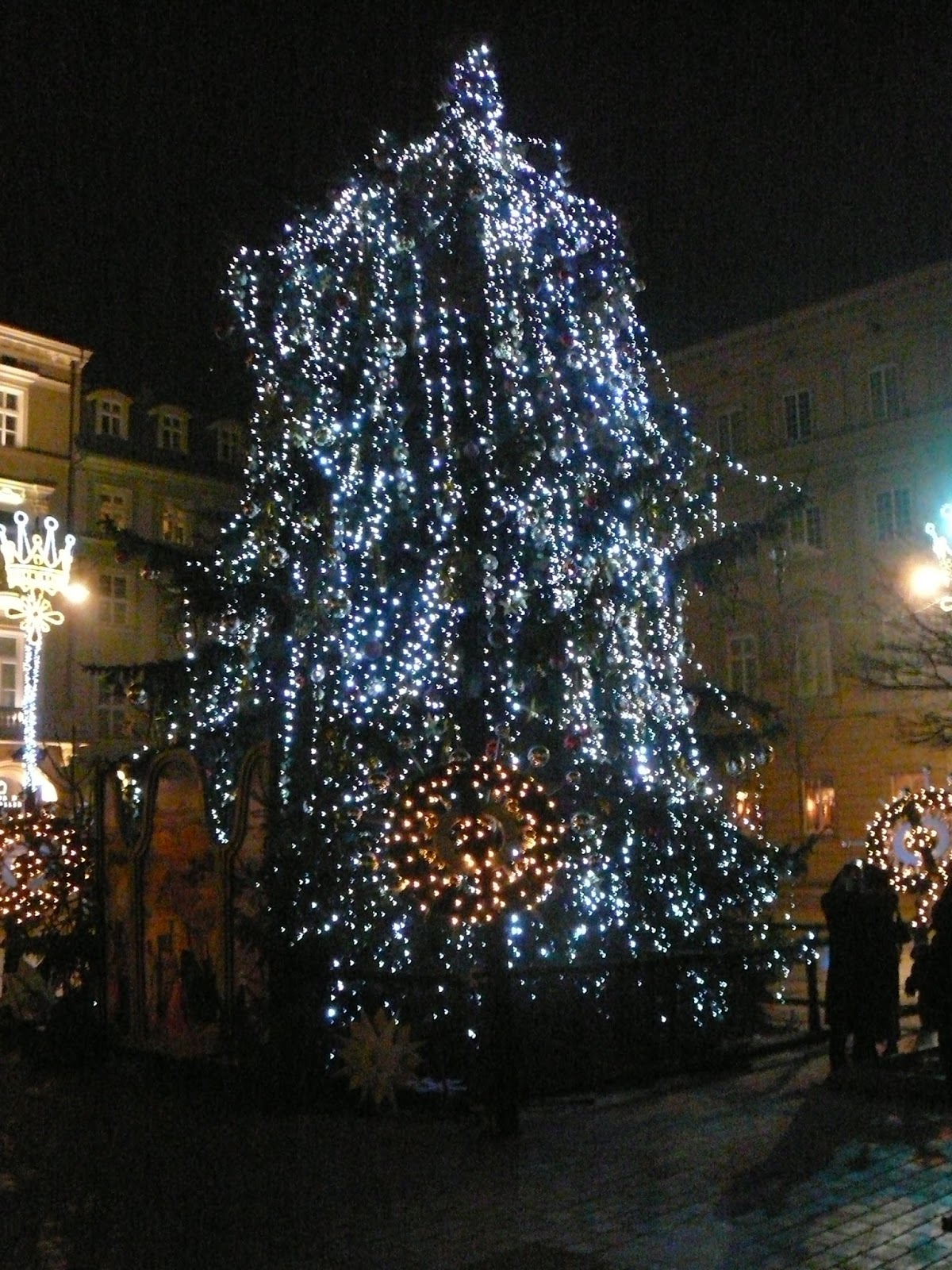
Each Christmas we rejoice in lights
that sparkle on the tree
to cheer us through the winter nights;
but stand a while and see
the Christmas crib, the story told
of when, so long ago,
glad angels filled the sky with gold
while shepherds stood below.
In Bethlehem a brighter dawn
than all our lanterns give -
the Light of lights, a Child new born,
shines there that we might live.
Friday, 11 December 2015
Conversations
I'm busy trying to write Christmas cards, and as I do so, I'm reminded that I haven't spoken with, or heard from, many of these people since last Christmas. That's not surprising in one sense; we all lead busy lives, and there's a limit to how many people we can keep in regular touch with, especially if they live far away. But we're not getting any younger, any of us, and I'm also reminded that the people I'm sending cards to are people who are still important to me, even if mostly that's because of memories of past times shared. Social media help us to stay in touch with some of these people, of course, but not all of them, particularly some of the older of my old friends. So I took time out from the writing and addressing just to phone one or two people up, and I'm really glad I did. Christmas round robin letters can help us keep in touch with each other, but nothing beats a real conversation. Let's see if I can do this keep in touch stuff a bit better in the year to come!
Thursday, 10 December 2015
Christmas Rose
The rose is one of the great symbols of Mary the mother of Jesus; this is a poem I wrote some six years ago.

A rose there springs from tender root,
Christ-bearer, hailed in song of old,
the flower of God's eternal love,
a new flame lit in winter's cold.
When half spent was the silent night,
the rose foretold by prophets' tongue
gave birth to one named Prince of Peace,
whose alleluias gladly sung
by angels in the frosty skies
brought shepherds to the manger-bed
to worship him; as so do we.
The Christmas Rose in white and red,
bright in the darkness of these times
is sign for us of Mary's grace -
Light of the world, of her new-born,
reflects in her so gentle face.

A rose there springs from tender root,
Christ-bearer, hailed in song of old,
the flower of God's eternal love,
a new flame lit in winter's cold.
When half spent was the silent night,
the rose foretold by prophets' tongue
gave birth to one named Prince of Peace,
whose alleluias gladly sung
by angels in the frosty skies
brought shepherds to the manger-bed
to worship him; as so do we.
The Christmas Rose in white and red,
bright in the darkness of these times
is sign for us of Mary's grace -
Light of the world, of her new-born,
reflects in her so gentle face.
Wednesday, 9 December 2015
The Other Disciple
I attended a lovely funeral today of a lady who was obviously a woman of great faith. She had chosen Luke 24.13-32 as the Bible reading to be used; and an unfortunate typo on the service sheets had replaced "The walk to Emmaus" with "The walk to Emma's" - something no-one had noticed when scanning and proof reading, until the service itself! The reader (a retired minister, I think) quite brilliantly introduced the reading by telling us that we now knew just who the other disciple was with whom Cleopas was walking home that day. From what people said, I think the lady herself would have appreciated the humour.
Tuesday, 8 December 2015
On Finding The Way (poem)
Panic is rising now like bile in his gut;
he feels its acid measure within him
as he stumbles on through the waste of bracken and bramble.
The vegetation is sodden from the rain that has soaked through his clothes,
while thunder continues to rumble along the far horizon,
and the day's light is failing. There are no
landmarks to be found, no signs to direct his path,
no safe ground on which to stand. Behind him the trees are black,
and echo already with the screech of owls.
Now he pushes between unruly clumps of tall rushes, and
beneath his feet the hungry mud is
sucking and pulling at his boots, and it soaks between the seams.
He no longer has the breath for calling out, all his effort must go
to keep moving, best he can. And yet he finds he is singing now
as he walks, singing against the demons of the dark, singing
to time and encourage his steps, that old song from his childhood,
from those dusty Sunday afternoons in chapel: "Lead, kindly light,
amid the encircling gloom." Oh, if only he had not strayed
from the well-trod and waymarked path, if only he had listened
to the instructions given for the long day's journey.
If he only he could have swallowed his pride. Already
it is so very dark, so fearfully dark;
and yet as he presses forward
in that dark a light has appeared, small but clear,
and he hears singing to match his own, and
somewhere up ahead there is the promise of help and warmth of welcome,
of a known way and companions for the journey on; and there will be
rejoicing in heaven.
he feels its acid measure within him
as he stumbles on through the waste of bracken and bramble.
The vegetation is sodden from the rain that has soaked through his clothes,
while thunder continues to rumble along the far horizon,
and the day's light is failing. There are no
landmarks to be found, no signs to direct his path,
no safe ground on which to stand. Behind him the trees are black,
and echo already with the screech of owls.
Now he pushes between unruly clumps of tall rushes, and
beneath his feet the hungry mud is
sucking and pulling at his boots, and it soaks between the seams.
He no longer has the breath for calling out, all his effort must go
to keep moving, best he can. And yet he finds he is singing now
as he walks, singing against the demons of the dark, singing
to time and encourage his steps, that old song from his childhood,
from those dusty Sunday afternoons in chapel: "Lead, kindly light,
amid the encircling gloom." Oh, if only he had not strayed
from the well-trod and waymarked path, if only he had listened
to the instructions given for the long day's journey.
If he only he could have swallowed his pride. Already
it is so very dark, so fearfully dark;
and yet as he presses forward
in that dark a light has appeared, small but clear,
and he hears singing to match his own, and
somewhere up ahead there is the promise of help and warmth of welcome,
of a known way and companions for the journey on; and there will be
rejoicing in heaven.
Subscribe to:
Posts (Atom)